Last updated November 21, 2026
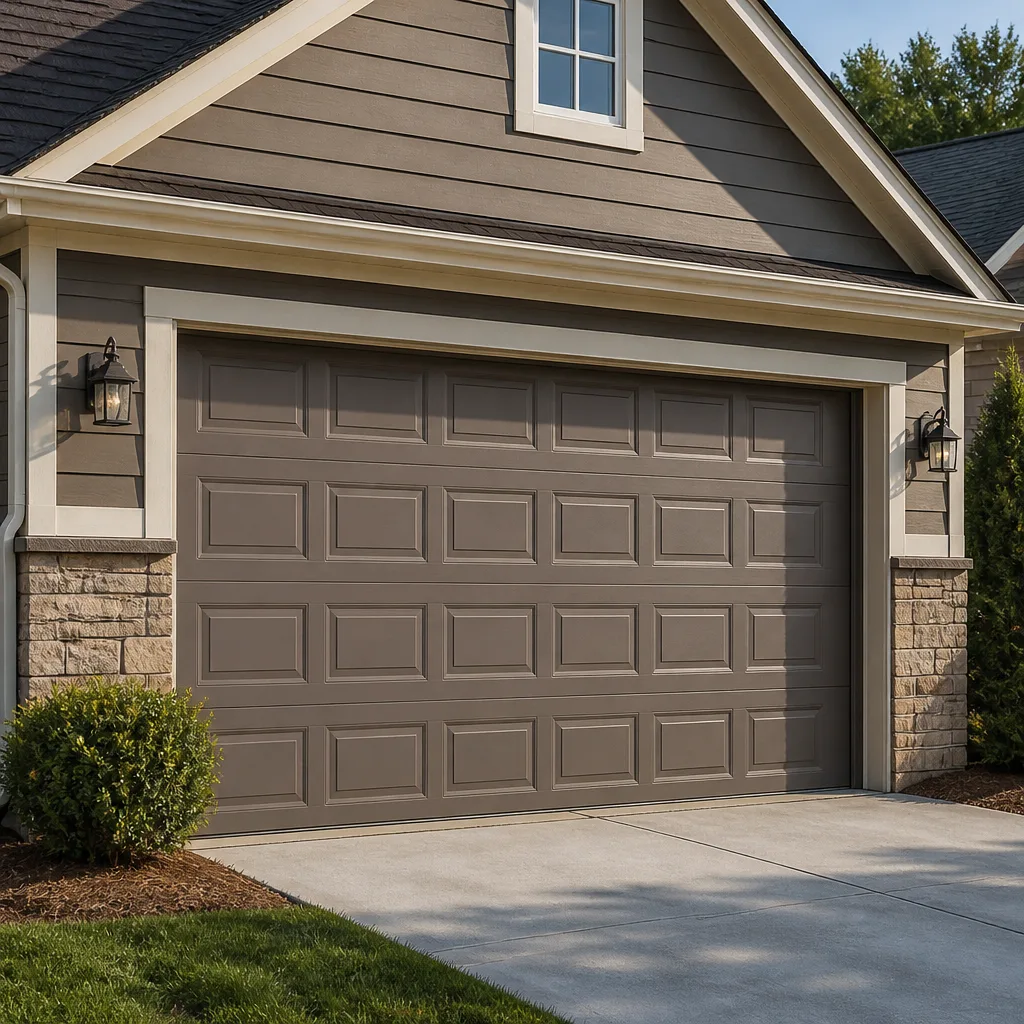 Raised-panel steel
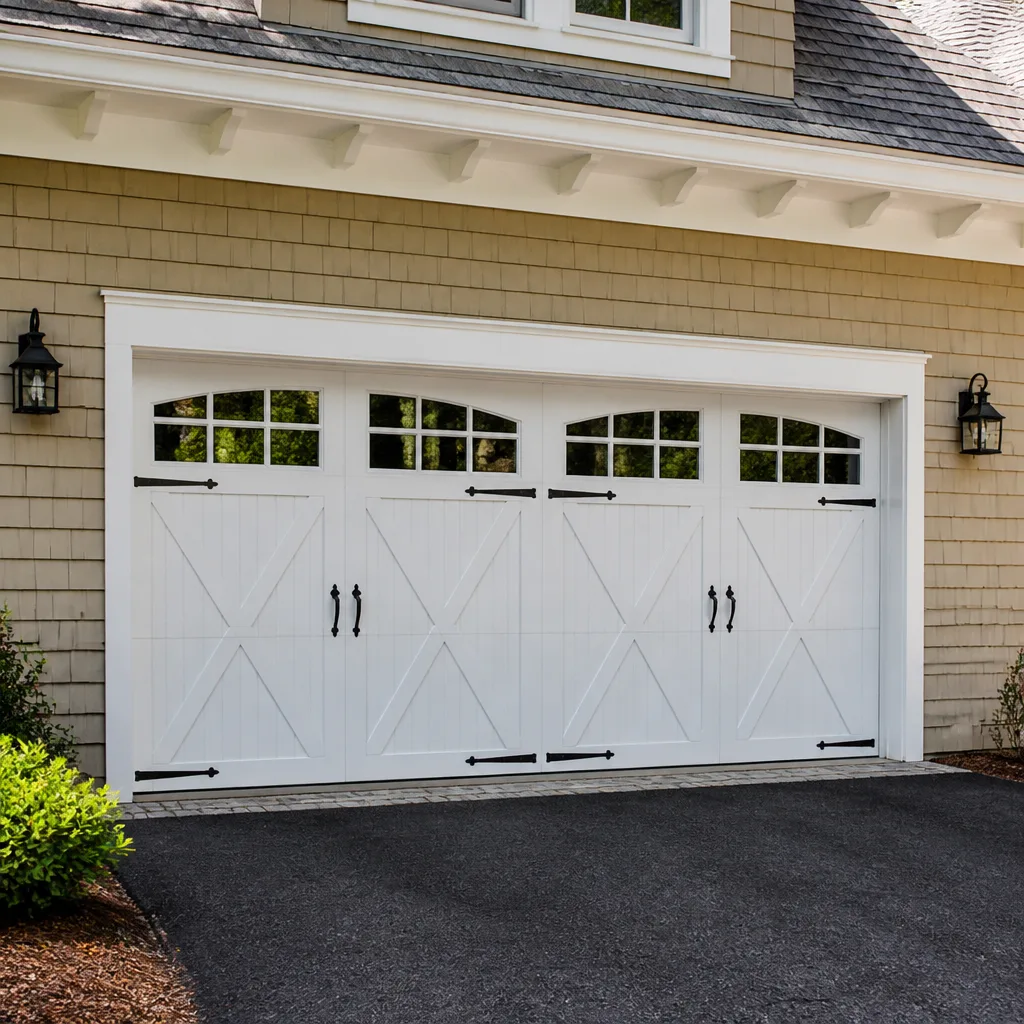 Carriage house
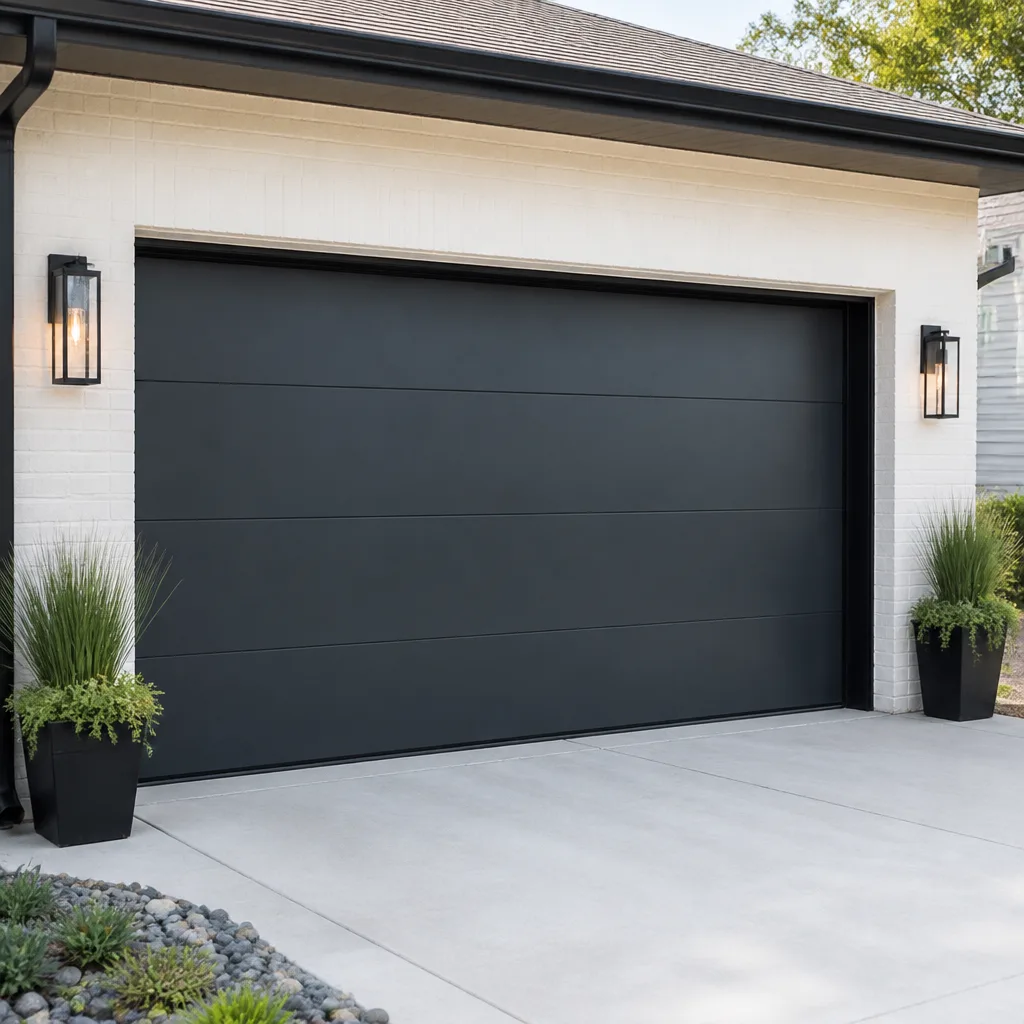 Modern flush
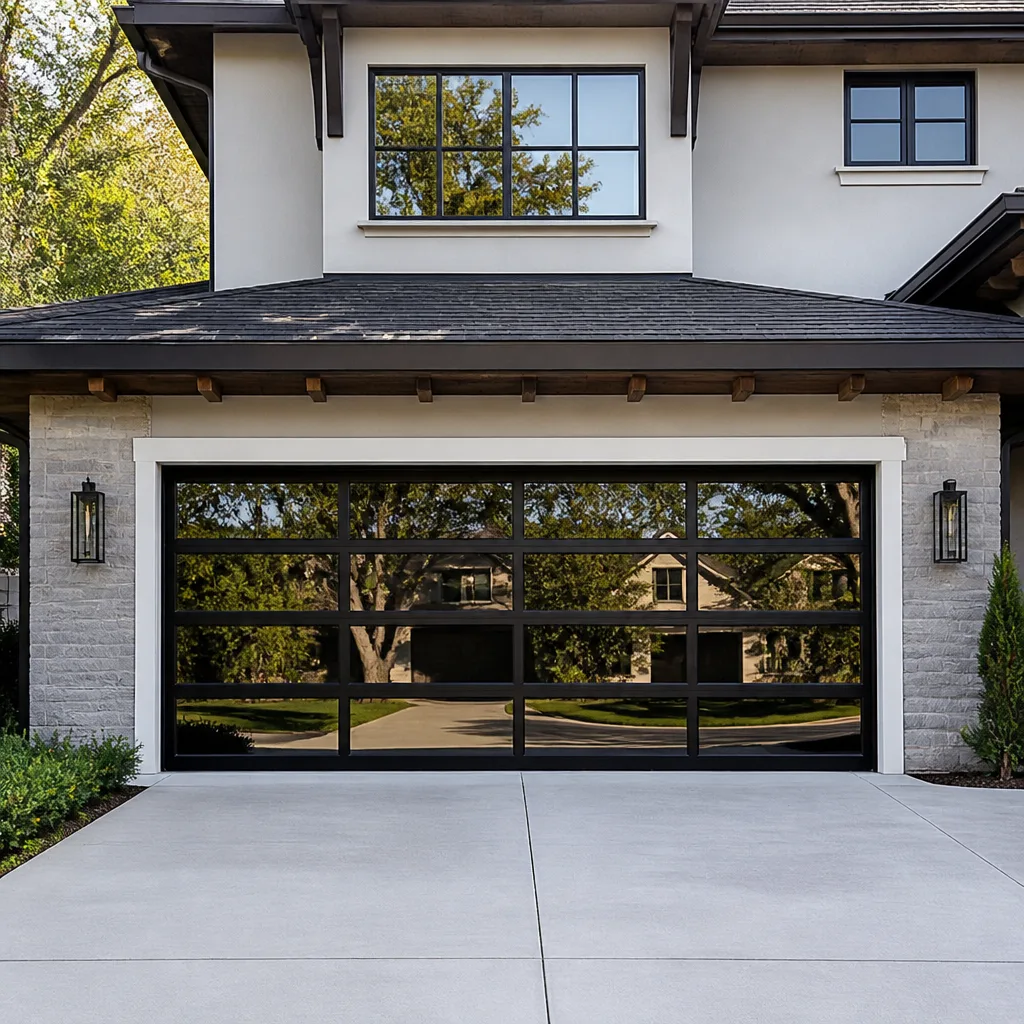 Full-view glass
 LiftMaster openers
 Chamberlain openers
Full 25-point door and opener safety check with every visit - springs, cables, rollers, tracks, and your LiftMaster or Chamberlain opener included
You get a price before we start. It does not change when the pro arrives.
Get your free estimateHow to Hire a Garage Door Contractor in Hialeah: A Step-by-Step Guide
A surprising number of garage doors installed in Hialeah each year fail Miami-Dade’s wind-load compliance requirements. Not because the homeowner was careless, but because they hired a contractor who skipped the product approval step and vanished before the inspection caught it. The door looked fine. It opened and closed. Then the paperwork surfaced and the real problem did too.
This guide is the screening process we wish every Hialeah homeowner had before they signed anything. You’ll learn the exact license Florida requires, how to check a contractor’s complaint history in under three minutes, the five questions that separate specialists from generalists, and what a legitimate written estimate looks like. It’s written for the people signing the checks, not for the trade.
Quick Answer
To hire a garage door contractor in Hialeah legally and safely, verify two things before anything else: that the contractor holds a valid Florida State Certified or County Registered license you can confirm on the DBPR portal, and that any door they install carries a Miami-Dade County Notice of Acceptance (NOA) for wind load. Ask for the estimate in writing with itemized labor and materials. No license number or NOA documentation, no contract.
Styles & brands we work with
- Raised-panel steel
- Carriage house
- Modern flush
- Full-view glass
- LiftMaster openers
- Chamberlain openers
Table of Contents
- What license a garage door contractor needs in Hialeah
- How to check a contractor’s license and complaints in three minutes
- The five questions to ask before you sign
- Why Miami-Dade product approval matters more than the price
- Red flags in the South Florida contractor market
- What a legitimate written estimate must include
- Repair or replace: how to decide
- Common mistakes to avoid
What License Does a Garage Door Contractor Need in Hialeah?
A garage door contractor working in Hialeah needs either a Florida State Certified license or a Miami-Dade County Registered (local) license to pull permits legally. Garage door installation that touches the opening, the header, or the structural framing generally requires a permit from the City of Hialeah or Miami-Dade County. Repair work on springs, cables, tracks and openers usually doesn’t require one, but installation and replacement almost always do.
The two license paths are not the same, and it helps to know which one you’re dealing with:
- State Certified contractor: licensed by the state, can work anywhere in Florida, and appears in the DBPR database under a certified license class.
- County Registered contractor: licensed locally through Miami-Dade County, limited to working within that jurisdiction, and appears under a registered license class.
Both can be legitimate. The problem is the third category: someone with neither, working out of a pickup, who tells you “we don’t need a permit for a door like this.” In Hialeah, a garage door replacement on a home usually does need one, and a contractor who suggests otherwise is telling you something about how they’ll handle the paperwork on your job too.
Ask for the license number in writing, before you sign, and confirm it matches the company name on the estimate. It’s a two-minute ask. The contractors who hesitate are the ones you don’t want. Our own technicians have up to 13 years of experience, and every job we connect you with is handled by a licensed and insured local professional working under Florida’s requirements.
How to Check a Contractor’s License and Complaints in Three Minutes
The Florida Department of Business and Professional Regulation (DBPR) runs a free public database that lists every licensed contractor in the state, their license class, status, and any disciplinary history. You can check a Hialeah contractor in about three minutes. Here’s the process:
- Go to the DBPR license lookup at myfloridalicense.com. Use the “Verify a License” search.
- Search by license number or by the company name exactly as it appears on your estimate.
- Confirm the license status reads “Current” or “Active.” A “Delinquent,” “Inactive,” or “Null and Void” status means the contractor can’t legally work for you right now.
- Check the license type. It should match the class of work they’re proposing (residential contractor for a single-family door, for example).
- Scroll to the disciplinary section. This is the part most homeowners skip. It shows complaints, citations, and license actions. One old, resolved citation isn’t necessarily disqualifying. A pattern of unresolved complaints is.
Three minutes. That’s the entire check. If the contractor’s name isn’t in the database, or the license number they gave you belongs to someone else, you’ve learned what you needed before any money changed hands. Hialeah has some of the busiest residential construction turnover in Miami-Dade, and a quick DBPR check is the cheapest insurance you’ll buy all year.
The same database lets you look up a contractor’s corporate registration, which is useful when the “company” turns out to be a newly formed LLC with an empty address. If the history is short and the license is new, ask for references from completed jobs in Hialeah itself.
The Five Questions to Ask Before You Sign
Most generalists can answer two or three of these. A specialist answers all five without hesitating. The questions are designed to surface exactly what a homeowner hiring a contractor in Hialeah needs to know before money changes hands.
1. What’s your license number, and can I verify it now?
Any legitimate contractor has it memorized or on hand. One who says “I’ll text it to you later” is telling you something.
2. Will the door come with a Miami-Dade NOA?
This is the question that separates a garage door specialist from a generalist. Every exterior-door product installed in Miami-Dade County’s wind-borne debris region needs a Notice of Acceptance (NOA) issued by the county, which documents the product’s wind-load rating and installation requirements. A specialist knows where the NOA is on the door, how to pull it for your model, and how to give it to you for your permit file. A generalist stares at you and asks what an NOA is. That’s the moment you know which one you’re hiring.
3. Is the estimate itemized, in writing, with labor and materials broken out?
Verbal quotes are worthless in Florida. A written estimate protects you if the job goes sideways and a dispute ends up in small claims court. Ask for it before any work begins.
4. Are springs, cables, tracks and hardware covered by a written labor and parts warranty?
Coverage length varies, and that’s fine. What matters is that the warranty is written down, shows what’s covered, and shows what voids it. A verbal “we stand behind our work” is worth as much as the paper it isn’t on.
5. Who pulls the permit, and is the fee in the estimate?
In Hialeah, the contractor usually pulls the permit. If they say you should pull it, ask why. The permit fee should be visible in the estimate, not appearing later as a surprise add-on.
Why Miami-Dade Product Approval Matters More Than the Price
Miami-Dade County is in Florida’s wind-borne debris region, and garage doors are the largest opening on most single-family homes. When a storm loads the door, a failed door can compromise the structure. The county handles this with a product approval system: every door installed in the county needs an NOA documenting its tested wind rating, its anchoring requirements, and the specific installation detail it was tested under.
What this means for a Hialeah homeowner is simple. If you hire a contractor who installs a door without the correct NOA, you can end up with:
- A failed inspection at final, which can hold up your certificate of occupancy or a refinance.
- An insurance carrier that questions the improvement or declines a claim tied to the door.
- A door that isn’t anchored to the tested specification, which can fail under wind load.
None of this shows up in the price. That’s the trap. A $300 savings on an unapproved door can turn into thousands of dollars of rework when the inspection fails, and you don’t get to appeal to the contractor who’s no longer answering the phone.
We work on the major door brands, including Clopay and others, and every installation we connect you with is pulled with the NOA on file. When you’re comparing contractors in Hialeah, ask for the NOA sheet before you compare prices. The cheapest door on the quote is usually the one without it.
Red Flags in the South Florida Contractor Market
South Florida has a specific pattern of contractor fraud that spikes after major storms. Unlicensed crews move in, offer to fix or replace garage doors and other damaged openings quickly, take deposits, and disappear before the next hurricane season or the warranty question comes up. They know the market. They know which streets are busy. They don’t stick around.
Here’s what to watch for in Hialeah specifically:
- Cash-only deposits. Legitimate contractors take deposits, but they take them by check or card so there’s a paper trail. Cash-only + no written estimate is the classic pattern.
- “We’re working in the neighborhood today.” Door-to-door sales for garage work is almost always a red flag unless the crew is verifiable through the DBPR and a local business address.
- Pressure to sign before the “price goes up.” Real specialists quote you, answer questions, and give you time to check their license. Fake urgency is a sales tactic, not a weather forecast.
- No physical business address on the estimate. A legitimate Hialeah contractor has a verifiable address on their paperwork, even if they operate as a service-area business.
- Pressure to skip the permit. “We don’t need one for this job” is code for “I’m not licensed to pull one.”
- Warranty only offered verbally. If it isn’t in the estimate, it doesn’t exist.
Outside of storm season, the smaller red flags matter too: no written estimate, a license number that doesn’t appear in DBPR, a quote that lists a single lump sum with no breakdown. Any one of them is a reason to slow down. Any three together is a reason to walk.
What a Legitimate Written Estimate Must Include in Florida
A Florida garage door estimate should list the door model, size, the NOA number, the opener model if one is included, the labor breakdown, the permit fee, and the hardware and spring type. Anything less detailed than that is leaving room for a surprise invoice when the job is finished. Here’s what a proper estimate looks like:
- Contractor information: legal company name, license number, physical address, phone, email.
- Scope of work: precisely what’s being done (e.g., “replace single-car overhead door, 8×7, with new springs, tracks, and rollers”).
- Product specifics: door brand, model number, size, panel layout, window options, color.
- NOA documentation: the Miami-Dade NOA number and the tested installation detail the door will be anchored per.
- Opener details (if included): brand and model. We work with LiftMaster, Chamberlain, and Genie systems, so the estimate should name the one you’re getting.
- Itemized labor and materials: separate line items for door, hardware, labor, permit fee, and disposal.
- Timeline: start window, duration, and any lead time on the door itself.
- Warranty terms: labor warranty and manufacturer warranty in writing.
- Payment schedule: deposit amount, progress payments, and final payment due on completion.
- What’s excluded: anything not in scope (e.g., drywall repair, repainting, framing repairs if rot is found).
Vague line items on a quote hide the two things that drive surprise costs: unmentioned demolition and unmentioned permit fees. If the quote lists “door install – $X,XXX” with no breakdown, the contractor can add anything they want once the door is off the truck.
For repair work, ask whether the price is a flat-rate job price or an hourly rate plus materials. A written flat-rate price protects you from a spring repair that turns into twelve billable hours. And for anything involving springs, cables, or torsion assemblies, ask whether the tech is trained on the specific hardware brand. That’s what a garage door spring repair quote should be built around.
Repair or Replace: How to Decide Before You Call
Most homeowners in Hialeah call a contractor with a broken door and no idea whether it’s a $250 repair or a $2,500 replacement. You don’t need to diagnose it yourself. You do need a rough sense of what moves a job into each category so you can ask better questions.
Repair is typically the right call when:
- The only failure is a spring, cable, roller, or opener component, and the door panels and tracks are intact.
- The door is balanced and opens and closes by hand with reasonable effort.
- The opener is the failing part, not the door itself.
Replacement is usually worth discussing when:
- Panels are dented, rotted, or separating along the seams.
- The door is more than a decade old and requires repeated hardware repairs.
- The opener is failing and the door is old; replacing both together usually makes the math work better than replacing each separately.
The honest answer is that a technician has to look at the door to know for certain. What you can do before the call is note the door’s brand (look at the edge of the panel or the opener housing), its approximate age, and what’s actually happening (won’t open, opens partway, opens and reverses). That lets the tech arrive already knowing what to expect. It’s the same principle behind good garage door opener repair: a LiftMaster that reverses at the same point every time is a different diagnosis than a Genie that runs the motor but doesn’t move the door.
Common Mistakes to Avoid
- Hiring based on the lowest quote alone. In Hialeah’s market, a door quote that’s significantly below the others is usually below it because the NOA isn’t included, the permit isn’t being pulled, or the door is a discontinued model with no warranty coverage.
- Skipping the DBPR check. The single most common mistake we see from homeowners is not confirming the license before signing. Three minutes on myfloridalicense.com catches most of the problems that will surface later.
- Signing a lump-sum estimate with no line items. Without a breakdown, there’s no way to dispute a charge that appears after the job. Every line of a proper estimate should tie to something you can see.
- Letting the contractor skip the permit. If they offer to “work around” the permit, decline. The permit exists to protect your home and your insurance standing, not just the contractor’s.
- Assuming the door is already NOA-compliant because it opens and closes. Wind-load compliance has nothing to do with whether the door works on a calm day. It’s about how it holds up when it needs to, and it’s checked at inspection, not at delivery.
- Accepting a verbal warranty. A warranty that isn’t in writing isn’t a warranty. It’s a conversation.
- Not asking who actually does the work. Some quotes are from a salesperson who subcontracts the install to an unverified crew. Ask who’s coming to your door and whether that crew is licensed and insured for the work.
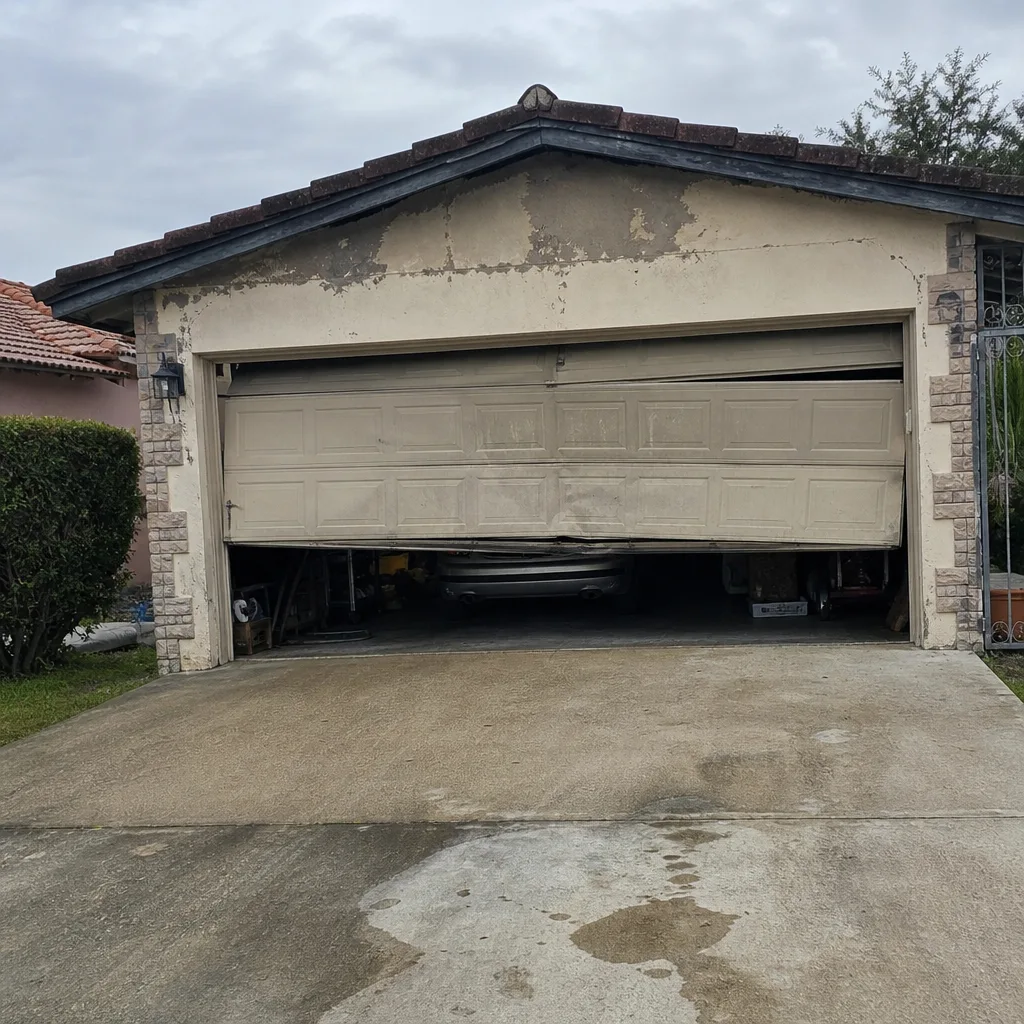
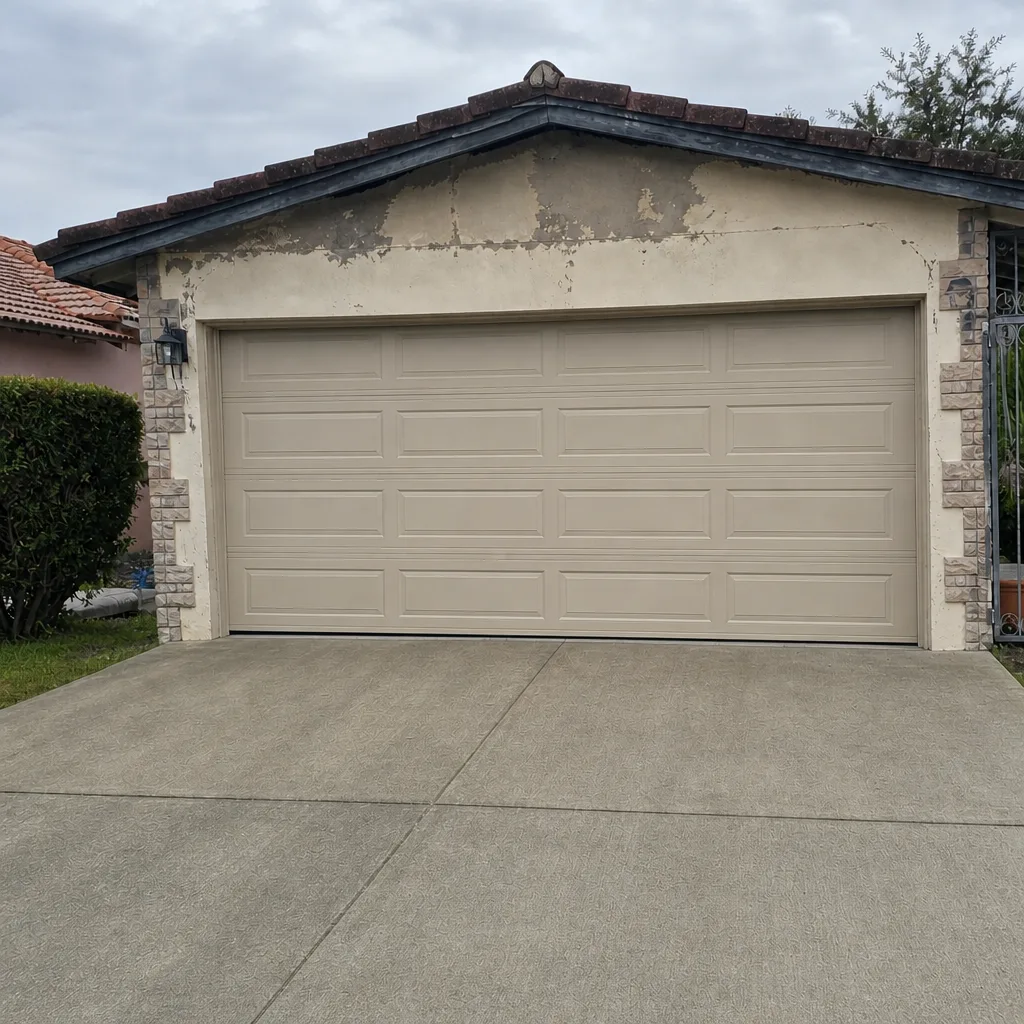
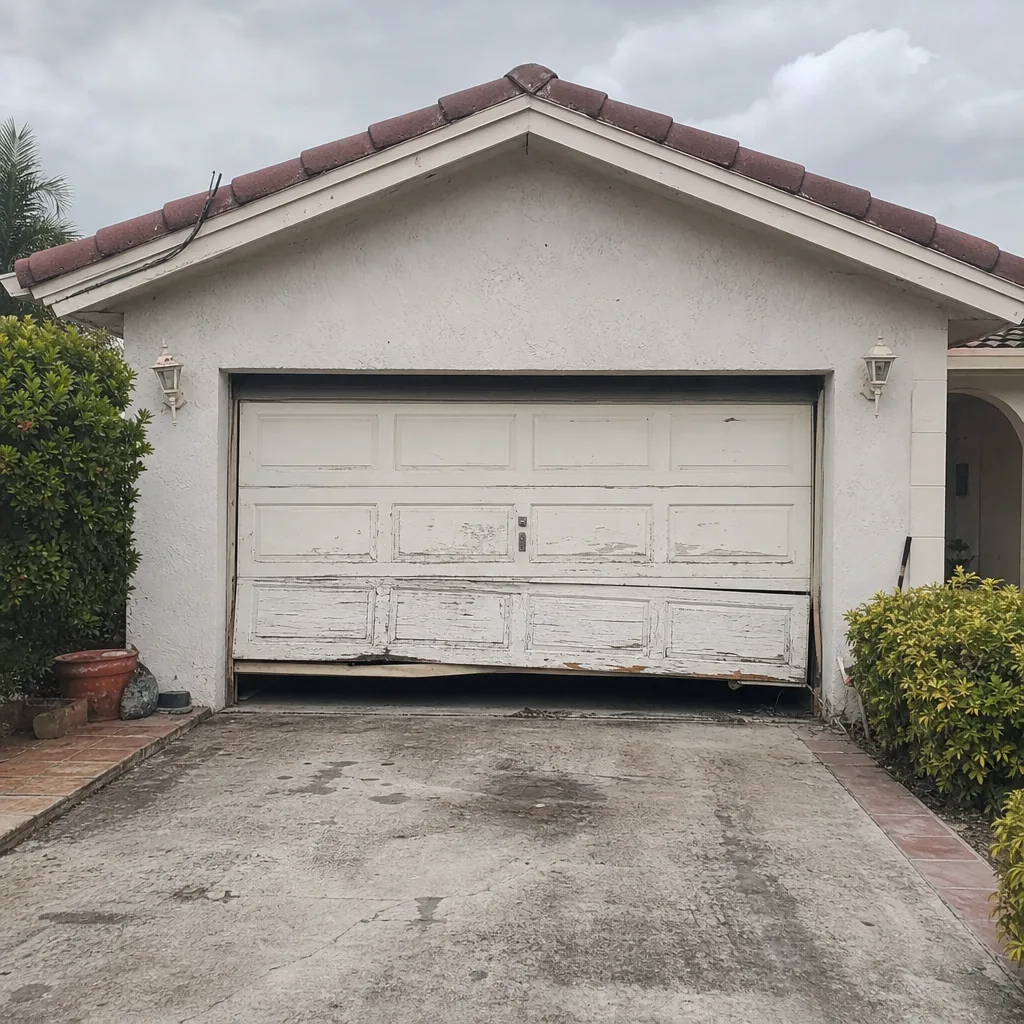
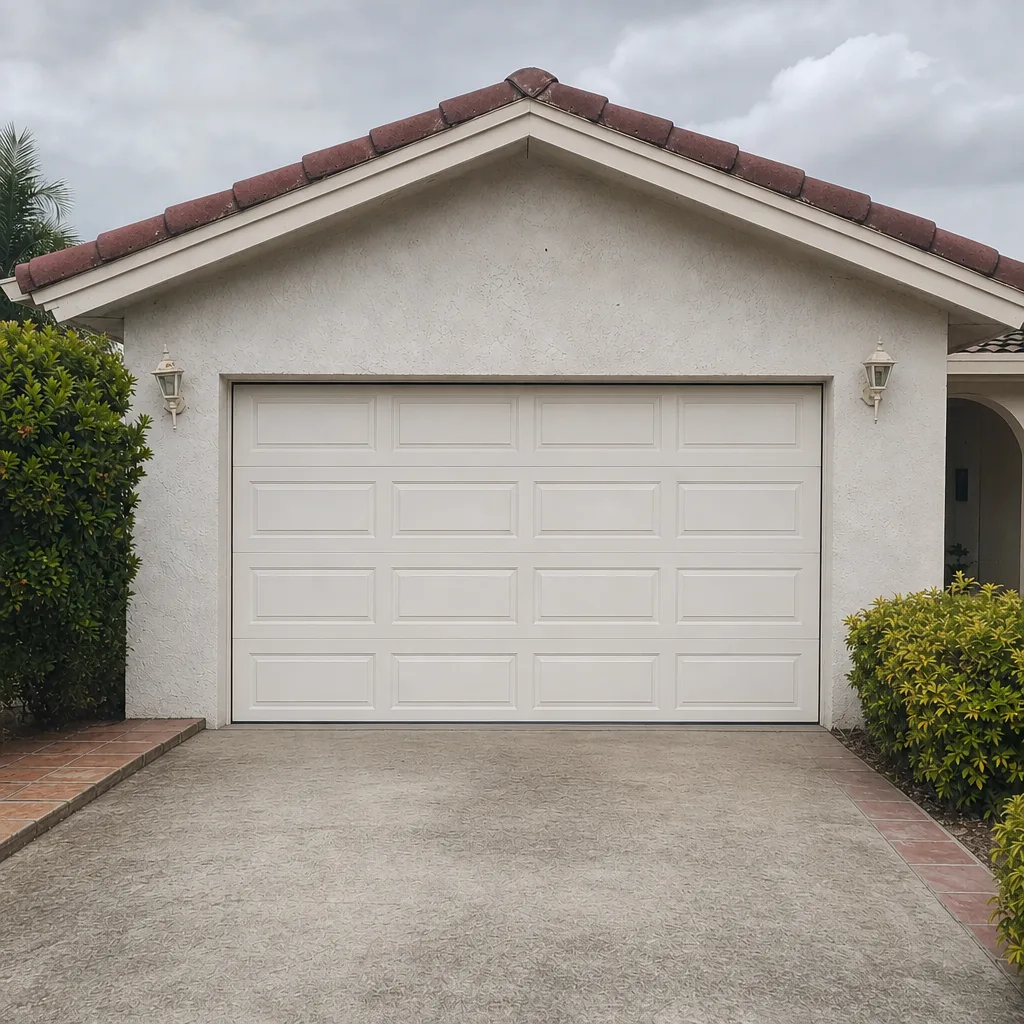
See the difference
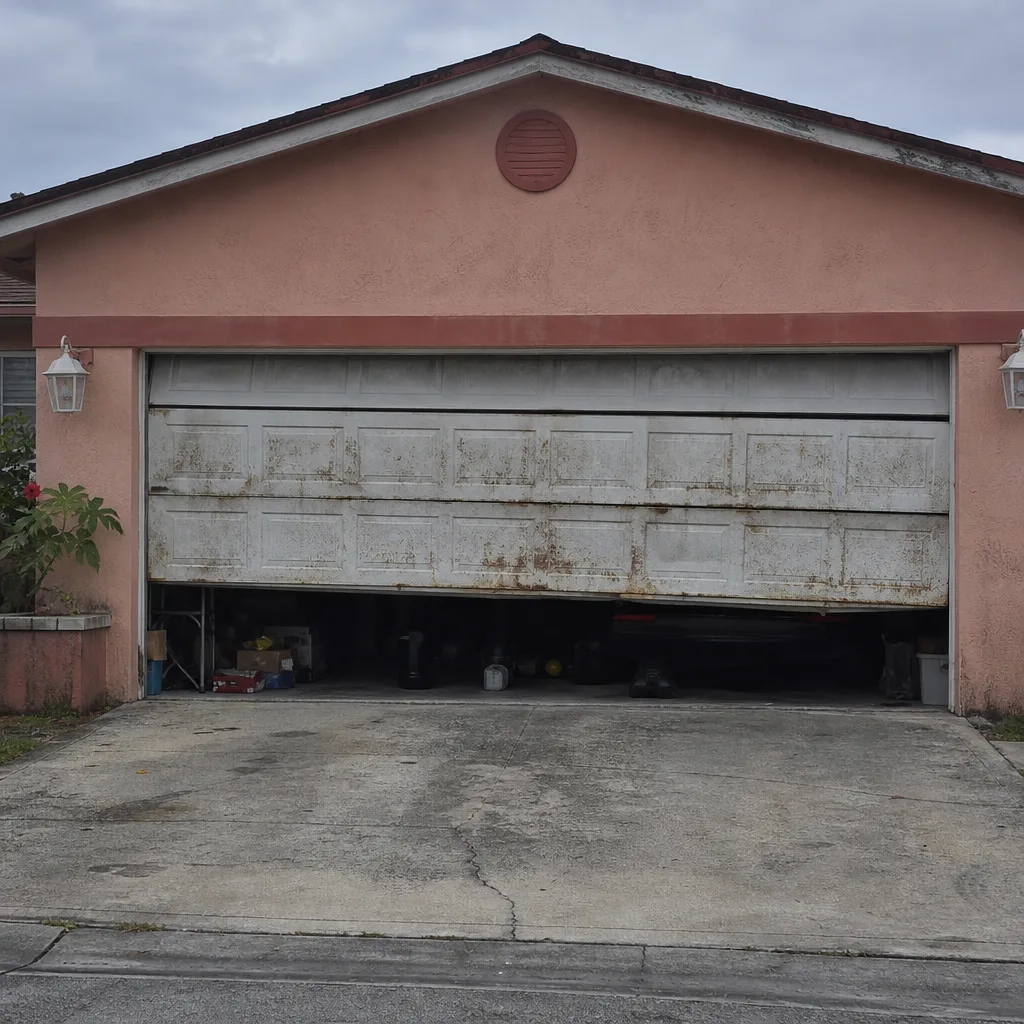 Before
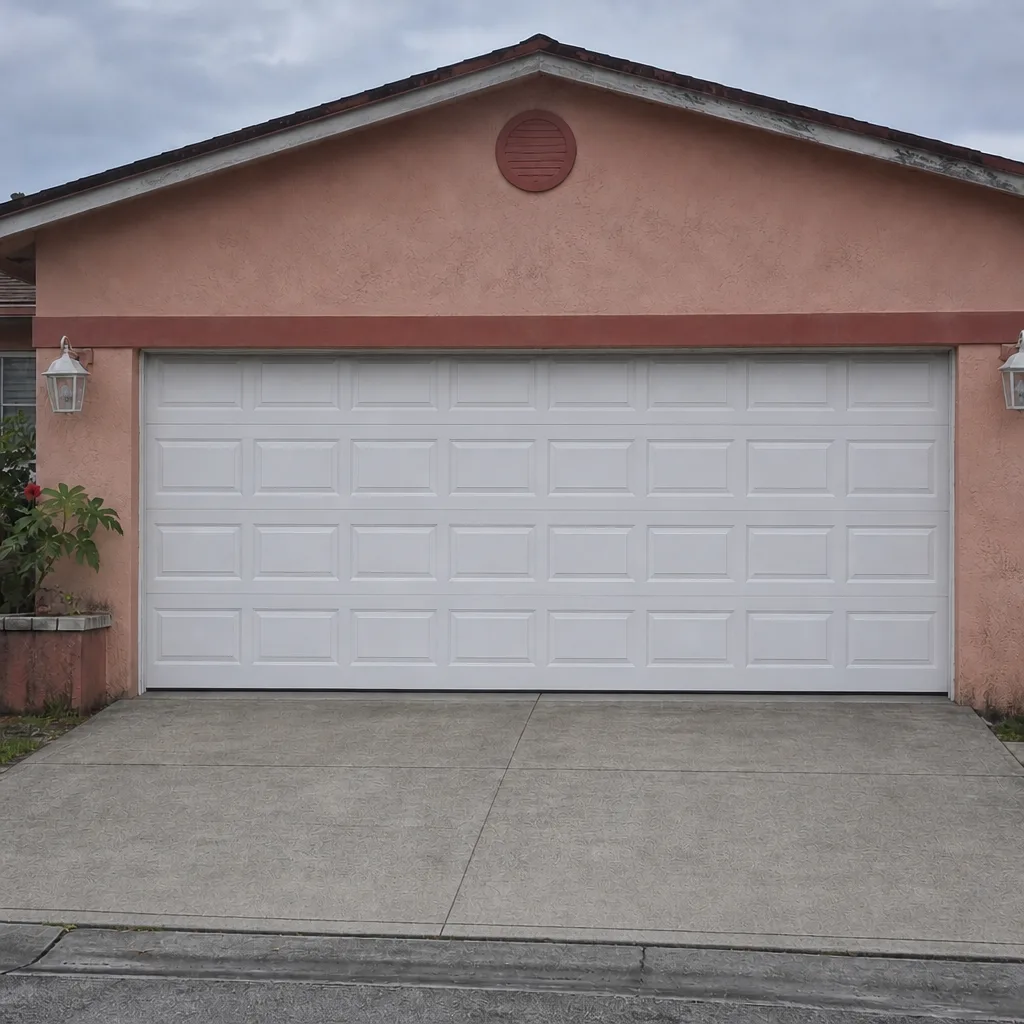 After
 Before
 After
 Before
 After
When to Call a Professional
Some garage door problems are worth a phone call even without a video or a follow-up visit. If the door won’t move at all, if you hear a loud snap and the door drops a few inches, if either cable goes slack, or if the door is hanging tilted because one side has lost tension, call a professional. The same goes for an opener that’s clearly running but not moving the door, a door that reverses at the same point every time it tries to close, and a door that’s visibly out of its tracks.
The one thing you should never do is attempt a spring or cable repair on your own. The torsion springs that lift most residential doors are under enormous tension, and the tools required to release and re-tension them are not the tools in a homeowner’s toolbox. The risk is serious injury, not a bad afternoon. We handle spring and cable work with the right tools and the right procedure; that’s what our garage door spring repair service is built around.
Our garage door repair team is available for emergency service when a door fails. Hialeah Garage Door Repair Co offers free estimates in Hialeah; call (833) 309-5115.
Frequently Asked Questions
In most cases, yes. Garage door replacements in Hialeah generally require a permit from the City of Hialeah or Miami-Dade County, and the door itself needs a Miami-Dade NOA. The exact requirement depends on your property and the scope of the job, so the safest move is to ask the city’s building department directly. Any licensed contractor you hire should already know the answer for your address.
A standard single-car or two-car door replacement usually takes a few hours of install time once the door is on site, plus the permit and inspection timeline. Door lead times vary by brand, model, and window and color options. When you get an estimate, ask for the door’s lead time and the permit timeline as separate line items. Hialeah Garage Door Repair Co quotes both before work begins.
Yes, through the Florida DBPR portal at myfloridalicense.com. You can search by license number or company name, confirm the status is Active, and review any disciplinary history. It takes about three minutes. Do it before you sign anything, every time. Call (833) 309-5115 for a free estimate from a licensed and insured local professional.
A Notice of Acceptance (NOA) is Miami-Dade County’s product approval document that verifies a door’s wind-load rating and its tested installation requirements. Garage doors installed in the county’s wind-borne debris region need one. Without it, the door may fail inspection and could create insurance complications. Ask any contractor for the NOA number on your specific door model before signing.
Repair costs vary by component and door type, so a phone estimate is the fastest way to get a real number. Spring repairs, opener repairs, and track and roller work all fall into different price bands. What matters most is the price being quoted and agreed in writing before any work starts. Call (833) 309-5115 for an exact quote; estimates are free.
Emergency garage door service is a standing offering, not a limited-hours add-on. When a door fails and creates a security or safety risk, call. We can book emergency work and connect you with a local professional. Same-day service is available for most repairs, with fast dispatch during business hours. All of this starts with a call to (833) 309-5115.
The Bottom Line
Hiring a garage door contractor in Hialeah comes down to two non-negotiables: a verifiable license and Miami-Dade NOA documentation on the door. Everything else – the quote, the warranty, the timeline, the brand – follows from those two. Check the DBPR portal. Ask the five questions. Get the estimate itemized in writing. Watch for the classic post-storm red flags. If the contractor you’re talking to has trouble with any of it, the door isn’t the only thing that needs a closer look.
If you’re working through a repair or a replacement in Hialeah and want a straightforward conversation about the options, we’re here. Hialeah Garage Door Repair Co handles repair, opener repair, spring repair, replacement, and emergency service across the major brands, including LiftMaster, Chamberlain, Genie and Clopay. The Hialeah Garage Door Repair Co team answers the phone and quotes before work starts. Call (833) 309-5115 for a free estimate. The written price you agree to is the price you pay.
Written by the team at Hialeah Garage Door Repair Co.