Last updated November 21, 2026
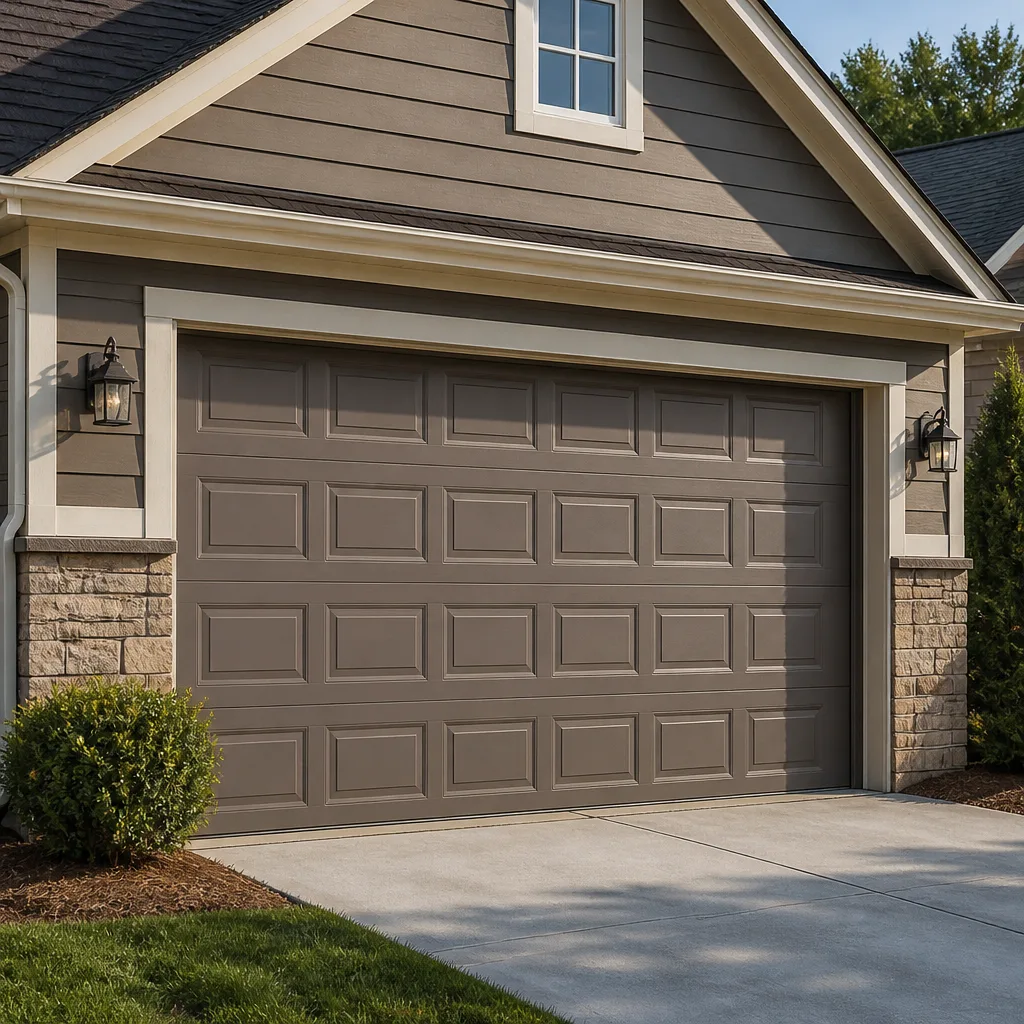 Raised-panel steel
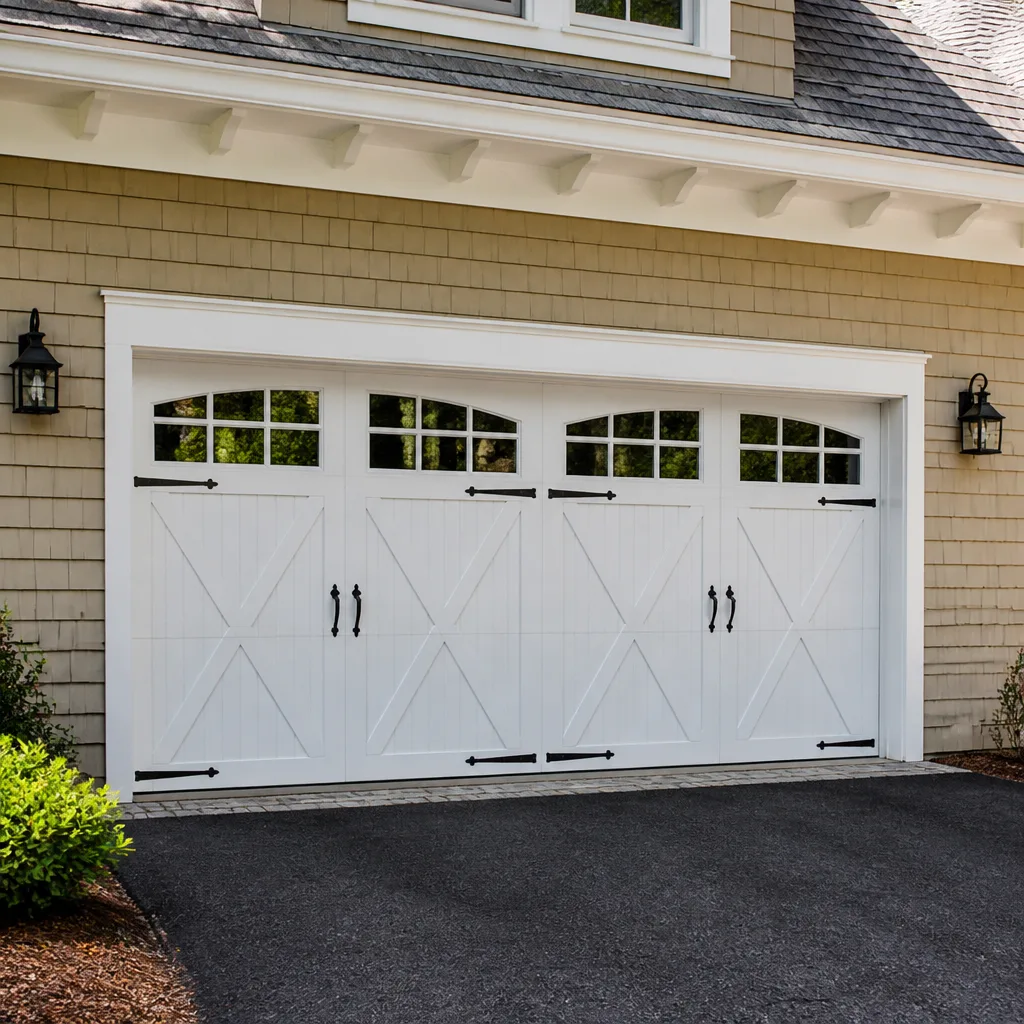 Carriage house
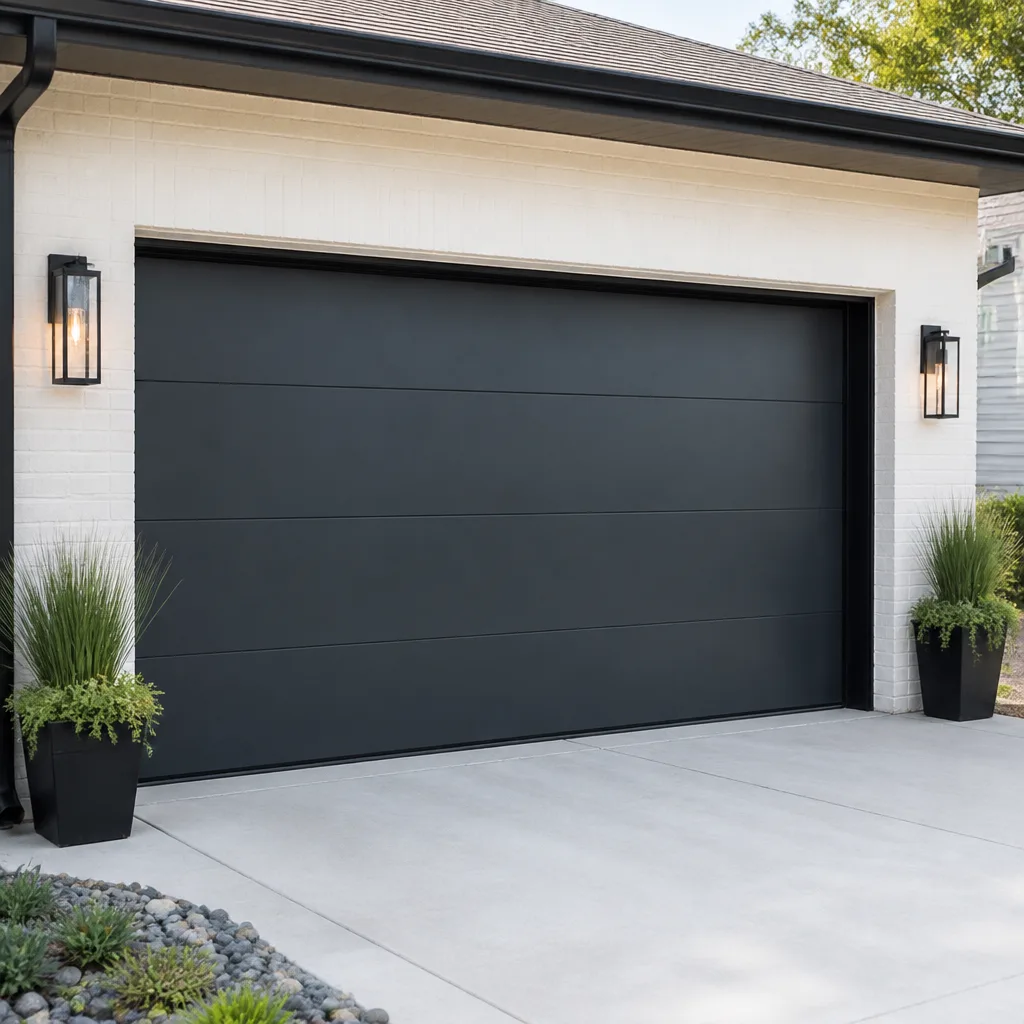 Modern flush
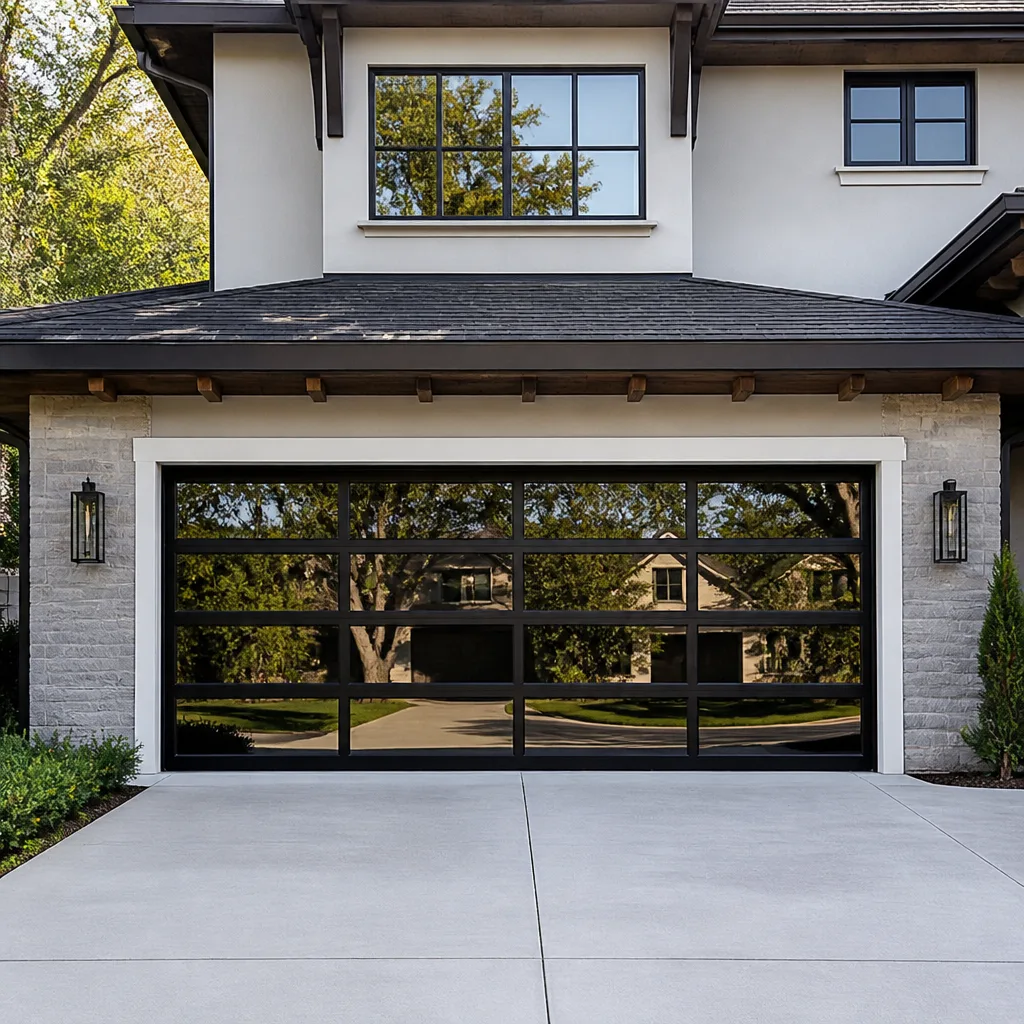 Full-view glass
 LiftMaster openers
 Chamberlain openers
Full 25-point door and opener safety check with every visit - springs, cables, rollers, tracks, and your LiftMaster or Chamberlain opener included
You get a price before we start. It does not change when the pro arrives.
Get your free estimateThe Complete Guide to Garage Doors in Hialeah
Most garage door guides are written for a suburb in Ohio. They talk about freeze-thaw cycles, road salt on the bottom panel, and snow load on the roof. Hialeah homeowners face none of that. What you face instead is wind-load engineering, year-round humidity that eats hardware from the inside, and a county product-approval system that decides which doors can legally go on your house in the first place. Half the generic advice online is useless here, and some of it will get a permit rejected. This guide maps every decision through a Hialeah lens: how Miami-Dade approvals work, why our climate kills springs and cables faster than inland Florida, what older Hialeah housing stock does to installation, and how to tell when a repair is genuinely the right call versus when you’re throwing money at a door that’s done.
Quick Answer
Garage doors in Hialeah have to satisfy more than most homeowners realize: Miami-Dade County’s product approval (NOA) system governs which doors are legal to install, the area’s wind requirements push toward rated doors rather than standard ones, and the humidity shortens the working life of springs, cables and opener components. A door that’s fine in a mild climate can fail inspection here. Below, we walk through permits, ratings, materials, repair-versus-replace thresholds, and the local quirks that trip up even experienced contractors.
Styles & brands we work with
- Raised-panel steel
- Carriage house
- Modern flush
- Full-view glass
- LiftMaster openers
- Chamberlain openers
Table of Contents
- How Miami-Dade’s NOA System Decides What You Can Install in Hialeah
- Wind-Rated vs. Hurricane-Rated: What Hialeah Actually Requires
- Why Hialeah’s Humidity Attacks Springs, Cables and Hardware
- Older Hialeah Homes: Header Clearance, Tracks and Opener Mounting
- Repair or Replace? A Decision Map for South Florida Doors
- Choosing and Diagnosing an Opener in a Connected Home
- Permits and the Hialeah Installation Process
- The Annual-to-Bi-Annual Maintenance Checklist
How Miami-Dade’s NOA System Decides What You Can Install in Hialeah
Miami-Dade County operates its own product approval program – the Notice of Acceptance, or NOA – that sits on top of state and national standards. A garage door sold nationwide may carry a Florida approval and still not be legal to install on a Hialeah home if it lacks a valid Miami-Dade NOA. This is the single biggest point where generic internet advice collides with local reality.
Here’s how it actually plays out on a typical replacement:
- Pick the door model. The manufacturer and model number need a current NOA that covers the design pressure your home requires. Ask us or your contractor for the approval number and verify it’s still active – approvals expire and get superseded.
- Match the pressure rating to the opening. The same door model can carry several pressure ratings depending on width, height, glazing, and reinforcement. A wide double-car opening often needs more reinforcement than a single.
- Check the anchoring system. The NOA specifies the fasteners, brackets and jamb conditions the door was tested with. Substituting a “close enough” bracket voids the rating.
- Pull the permit. Hialeah’s building department will ask for the NOA and the product control number on the permit application. If the door doesn’t have one, the permit stops there.
Brands that routinely carry the documentation include Clopay, Amarr, Wayne Dalton and Raynor – but “routinely” isn’t “always.” The exact model matters. If you’re shopping for a new door in Hialeah, the sequence is approval first, aesthetics second, because a beautiful door that fails permitting is a very expensive reorder. We’ve been through enough of these to know that the paperwork, not the panel design, is usually the bottleneck.
If you’re replacing a door and want a straightforward walkthrough of what fits your opening, our garage door repair team can look at the opening and advise before you commit to a model.
Wind-Rated vs. Hurricane-Rated: What Hialeah Actually Requires
The two phrases get used interchangeably online, and they’re not the same thing. “Wind-rated” is a general term for a door that’s been tested to some design pressure. “Hurricane-rated” typically means it meets Florida’s high-velocity hurricane zone requirements and carries the documentation to prove it. Hialeah sits inside that zone, so what you actually need is a door with a valid Miami-Dade NOA at a pressure rating that fits your opening – the marketing label on the box is secondary to the paper trail.
What that means for practical decisions:
- Standard doors are usually a non-starter. The cheapest non-rated doors at big-box stores generally lack the NOA and reinforcement required here. They’re fine in some parts of Florida. They aren’t fine in Hialeah.
- Reinforcement is part of the door, not an add-on. Wind-rated doors here use heavier gauge tracks, deeper struts and heavier jamb brackets than standard residential doors. Replacing only the panels while reusing old, lighter hardware can undo the rating.
- Glazing has its own approval. Glass panels need their own impact approvals on top of the door’s. A door NOA that lists “no glazing” doesn’t cover a glass panel you add later.
- The opener is separate. Wind load is handled by the door and its hardware. Your opener isn’t part of the wind rating, though it does have to be sized correctly for the heavier door.
If you’ve had a door fail a wind load calculation, or you’re not sure whether your current door is rated at all, that’s worth checking before anything else. A wind-rated door isn’t a luxury upgrade in Hialeah – it’s the baseline for legal installation. When in doubt, ask the building department directly and ask the manufacturer for the NOA. Both answers are free and both will save you a headache.
Why Hialeah’s Humidity Attacks Springs, Cables and Hardware
South Florida’s humidity is the quiet killer of garage door hardware. It doesn’t make dramatic failures the way a storm does. It just shortens the working life of anything made of steel, and then the failure shows up at an inconvenient moment. Springs, cables, hinges, rollers and track fasteners all feel it.
The mechanism is simple: condensation forms on cold metal, sits against the surface, and rust begins at the thinnest points. Springs – especially the coiled wire inside a torsion spring – rust from the inside out. Cables fray at the ends where the fittings trap moisture. Standard zinc-plated hinges pit on the bearing surface. The damage is invisible until something snaps or grinds.
What holds up better in a Hialeah climate:
- Galvanized or oil-tempered springs with heavier coatings. The coating thickness matters more than the base metal. Ask what’s on the spring, not just what it’s made of.
- Stainless or galvanized rollers. Nylon rollers with sealed bearings last longer than exposed steel rollers in high humidity, but the bearings still need to be sealed properly.
- Coated or galvanized cables. Raw steel cable without a coating will show surface rust in a season or two.
- Aluminum or steel doors with proper paint systems. Wood doors can survive in Hialeah if they’re sealed on all sides and re-sealed regularly, but they demand maintenance most homeowners don’t get around to.
This is also why garage door spring repair is a common call for us in Hialeah. Torsion springs are under enormous stored tension, and when they finally give way, it’s not the kind of repair a homeowner should attempt. A torsion spring released without the right winding bars can cause serious injury. If you hear a loud bang from the garage and the door won’t lift, stop trying to open it and call us.
Older Hialeah Homes: Header Clearance, Tracks and Opener Mounting
A large share of Hialeah’s housing stock went up between the 1950s and the 1980s, and that history shows up in the garage almost every time. Doors and openers that install cleanly into a newer home often run into complications in these older structures – not because they’re defective, but because the original build wasn’t designed for the heavier systems we install today.
The three issues we look for first:
- Header clearance. Low headroom setups require either a low-headroom torsion system or a custom track layout. Standard track won’t fit if there’s not enough distance between the top of the door and the ceiling.
- Track compatibility. Older jambs may not be plumb, square, or thick enough to support the brackets a modern wind-rated door requires. New brackets often need blocking or reinforcement behind them.
- Opener mounting. Ceiling joists in mid-century Hialeah homes are often spaced or sized differently than modern openers assume. The opener needs a solid anchoring point, and that sometimes means adding a header or a length of angle iron first.
None of these are dealbreakers. They just need to be identified before the door arrives, not after. When we do a site visit on an older Hialeah home, we measure headroom, check the jamb structure, and confirm the ceiling anchor points before we quote the job. A door that seems straightforward online can turn into a three-trip job if the prep isn’t done first.
We work with LiftMaster, Chamberlain, Genie, Craftsman, Clopay, Amarr, Wayne Dalton and Raynor because the brands cover most of what’s already installed in this housing stock. When we see a Raynor door from a 1970s installation or a Craftsman opener that’s older than the current homeowner, we know what we’re looking at, and we don’t have to guess at brackets or opener sizing. If your opener is the piece that’s failing, our garage door opener repair handles upgrades and diagnostics across those platforms.
Repair or Replace? A Decision Map for South Florida Doors
Most repair-or-replace guides are written around northern climate assumptions: rusted panels from road salt, cracked panels from freeze-thaw, warped frames from ice. Hialeah’s drivers are different. Our doors age primarily through humidity, sun exposure, and wind stress, and the decision thresholds shift accordingly.
Here’s how we think through the call:
- Single broken spring or cable: Repair. A torsion spring, cable, roller or hinge can usually be replaced on its own, even on an older door, provided the door’s other components are still serviceable.
- Two or more springs failing within a short window: Replace both springs as a pair. Matched pairs are almost always the right call, and the cost for a matched pair is roughly double the single-spring price.
- Cracked or bent panels from wind loading: Replace those panels if the doors are still in production and the safety hardware wasn’t compromised. Replace the whole door if the panels can’t be sourced.
- Opener failing on a door that’s structurally fine: Repair or replace the opener, keep the door.
- Door close to the end of its engineered life, plus wind-rated upfit needed: Replace the whole system. Retrofitting a non-rated door to meet current wind requirements is often more expensive than a new approved door.
- Repeated opener-or-spring failures in the same 12 months: Step back and check whether the door is out of balance or the opener is undersized. Fixing the component repeatedly without checking the system is the definition of throwing money at it.
One local note: if your door is old enough that it predates Miami-Dade’s current NOA requirements, upgrading to a compliant door on your next failure is often worth doing proactively rather than after a failed inspection. We’re glad to look at what you have and tell you honestly which direction makes more sense.
Choosing and Diagnosing an Opener in a Connected Home
Openers today split into two useful buckets: legacy systems that still work perfectly well, and smart-home-compatible systems that connect to your Wi-Fi and phone. In Hialeah, both are common, and the right choice depends more on your door than on the feature list.
Diagnostic-first thinking, which is how we approach opener calls:
- Test the door’s balance first. A door that’s out of balance will overwhelm any opener, no matter how capable. Disconnect the opener, lift the door halfway, and let go. If it drops or drifts, it’s a door problem, not an opener problem.
- Check the safety sensors. Most “my door closes then reverses” calls trace to misaligned photo eyes, dirty lenses, or sun glare. It’s the least expensive fix and often the whole problem.
- Confirm the power and board. A clicking opener with no movement can be a bad logic board, a failed capacitor or a dead transformer. The exact failure identifies the fix.
- Match the replacement to the door. The opener’s lifting capacity needs to match the door’s weight plus the spring tension, not the other way around. A wind-rated steel double door needs a stronger opener than a light single door.
For smart-home compatibility, the major brands we cover – LiftMaster, Chamberlain, Genie, Craftsman – all offer connected models or module upgrades. A LiftMaster or Chamberlain opener with Wi-Fi and a phone app is a common modern pick, and a well-maintained Genie or Craftsman from a few years back is often worth keeping. We don’t push replacement when a repair will do the job, and we don’t push a legacy system when a homeowner wants the app monitoring and video features newer openers offer.
Permits and the Hialeah Installation Process
Garage door replacement is a permitted project in Hialeah, and the permit is not a formality – it’s the mechanism that enforces the NOA requirements described earlier. Skipping the permit doesn’t save you anything long term. It just leaves a compliance problem on the property for the next inspection, sale, or insurance review.
The typical sequence on a new Hialeah installation:
- Site check and measurement. We verify headroom, jamb structure, ceiling anchors and the door model’s fit for your opening.
- Confirm the NOA and model number. We verify the approval is current and matches your opening’s pressure rating before the door is ordered.
- Written estimate. You approve the quote before we order anything. The written estimate sets the price; there’s no moving goalpost when the crew shows up.
- Permit application. We submit through Hialeah’s building department with the NOA documentation attached.
- Installation day. The old door comes off, the new door and hardware go on, and the opener is mounted and tested.
- Final inspection and handoff. The door is demonstrated and the safety hardware is confirmed functioning.
If you want the exact permit requirements for your specific address and door model, the Hialeah building department is the authoritative source, and we’re happy to walk you through what they’ll want to see. Our Hialeah Garage Door Repair Co team handles this routinely, and the questions the department asks are predictable once you’ve been through it a few times.
The Annual-to-Bi-Annual Maintenance Checklist
Preventive maintenance in Hialeah is mostly about beating humidity to the punch. The components that fail fastest here are the ones that can be lubricated and inspected – and once a year, most of them can be caught before they snap.
A solid maintenance routine for a Hialeah door:
- Lubricate hinges, rollers and springs once or twice a year. A garage-door-specific lubricant, not WD-40, keeps moisture off the metal and quiets the door. Two applications a year in our humidity is reasonable on older doors.
- Check cables for fraying. Run your eyes up the sides of the door. Any broken strand on a cable means it needs replacing before it snaps – cables are under extreme tension and shouldn’t be handled without the right tools.
- Test the balance. Disconnect the opener and lift the door through its arc. It should move smoothly with light force and stay put at the halfway point.
- Test the safety reverse. A properly working door reverses when it meets an object. If it doesn’t, the safety system needs diagnosis before anything else.
- Inspect the weather seal on the bottom. A cracked or compressed seal lets water in and shortens the life of everything downstream.
- Check the roller and hinge screws. Humidity loosens fasteners over time. A visual pass over the hardware catches the ones that need tightening.
What we don’t recommend is homeowner replacement of torsion springs or cables. Those are the mechanical components most likely to cause serious injury without professional tools and procedure. Annual maintenance catches their wear before they fail. Repair is a phone call.
Common Mistakes to Avoid
- Buying a door online before checking the NOA. A door without a current Miami-Dade approval can’t legally go on your Hialeah home. Confirm the approval before you pay, not after.
- Replacing only one spring when the pair was installed together. Matched pairs fail on the same schedule. Replacing one spring leaves the other on borrowed time and imbalances the door.
- Treating “wind-rated” as a marketing label. It isn’t a sticker. It’s a tested design pressure that has to match your opening, hardware and installation.
- Upgrading the opener before checking the door’s balance. A new opener fails faster on an out-of-balance door. Balance first, then openers.
- Reusing old lighter track with new wind-rated panels. The hardware carries part of the wind load. Reusing old hardware can void the new door’s rating.
- Putting off a fraying cable. Cables give visible warning before they snap. Handle the warning while it’s a repair, not an emergency.
- Ignoring Hialeah’s older housing quirks. Low headroom, non-plumb jambs and older ceiling joists are common in this housing stock. A site visit before ordering catches them.
See the difference
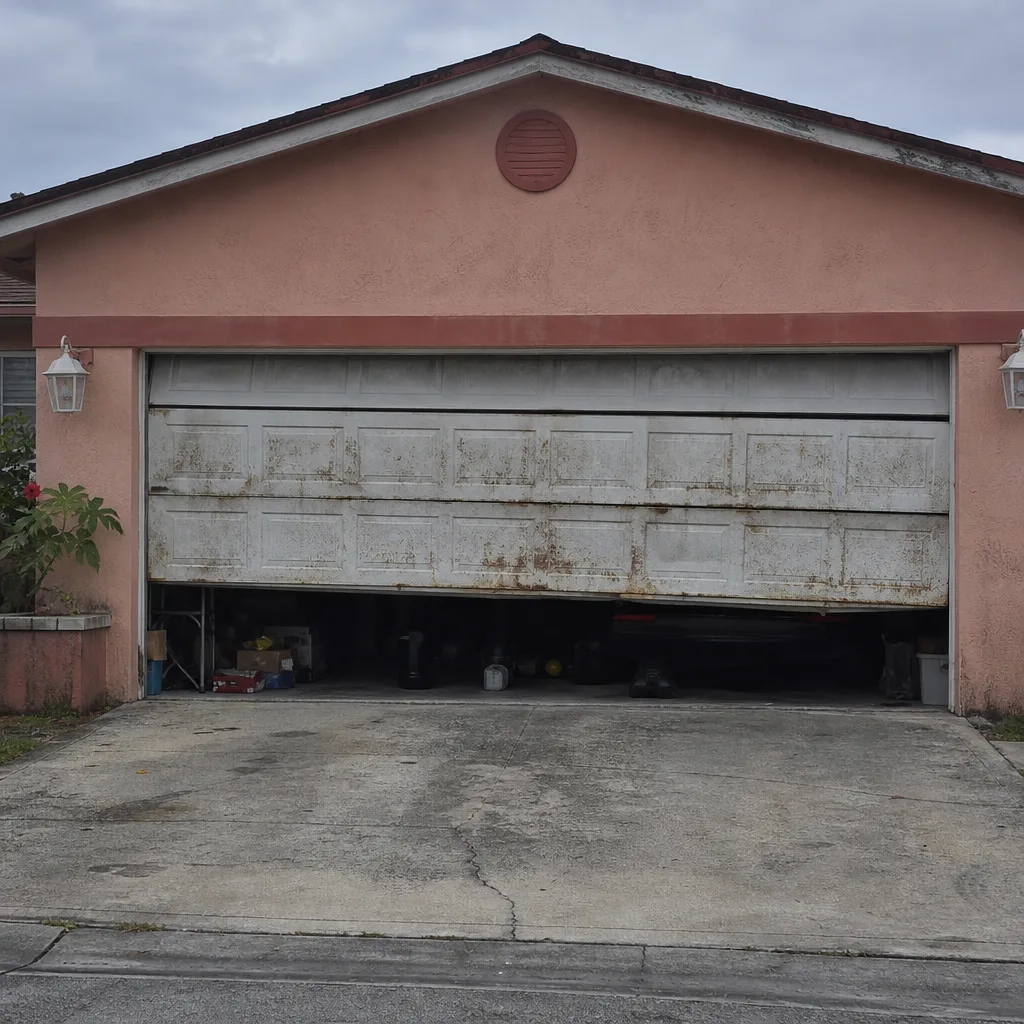 Before
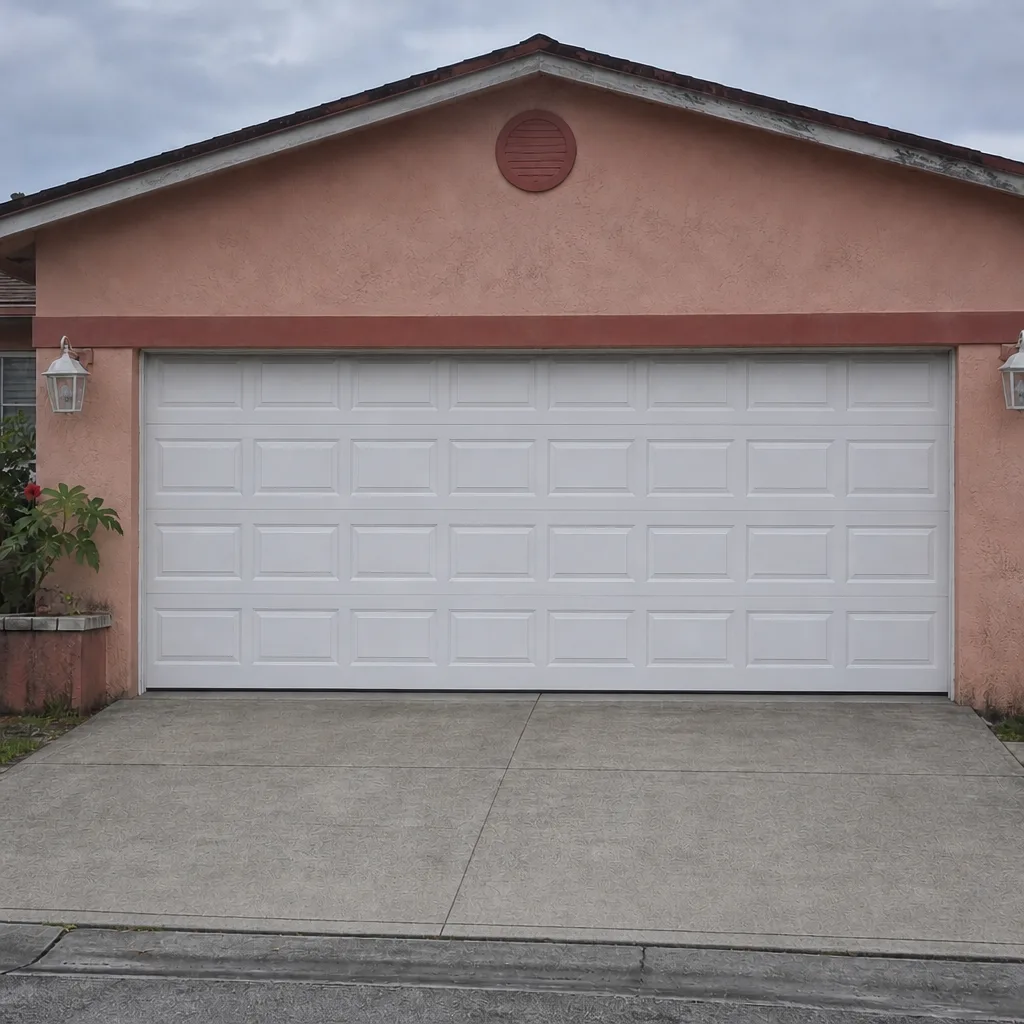 After
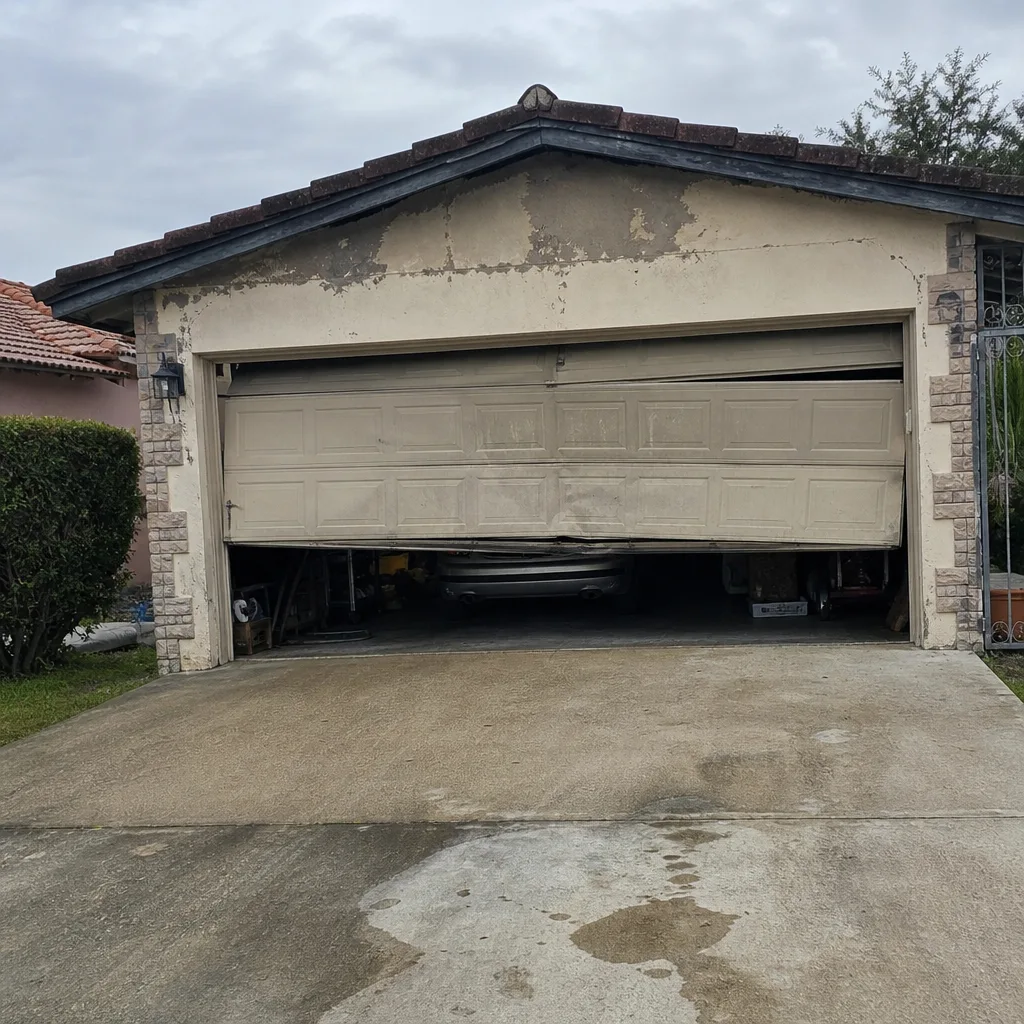 Before
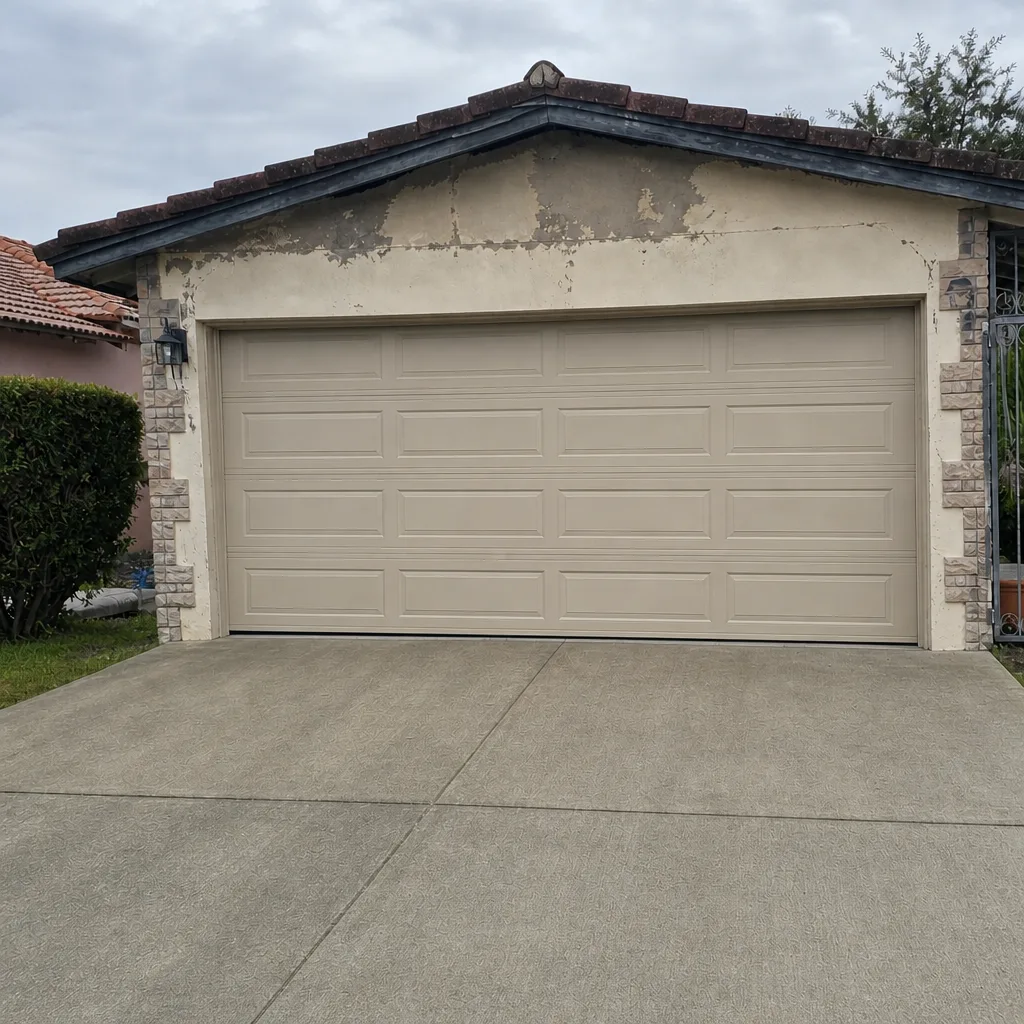 After
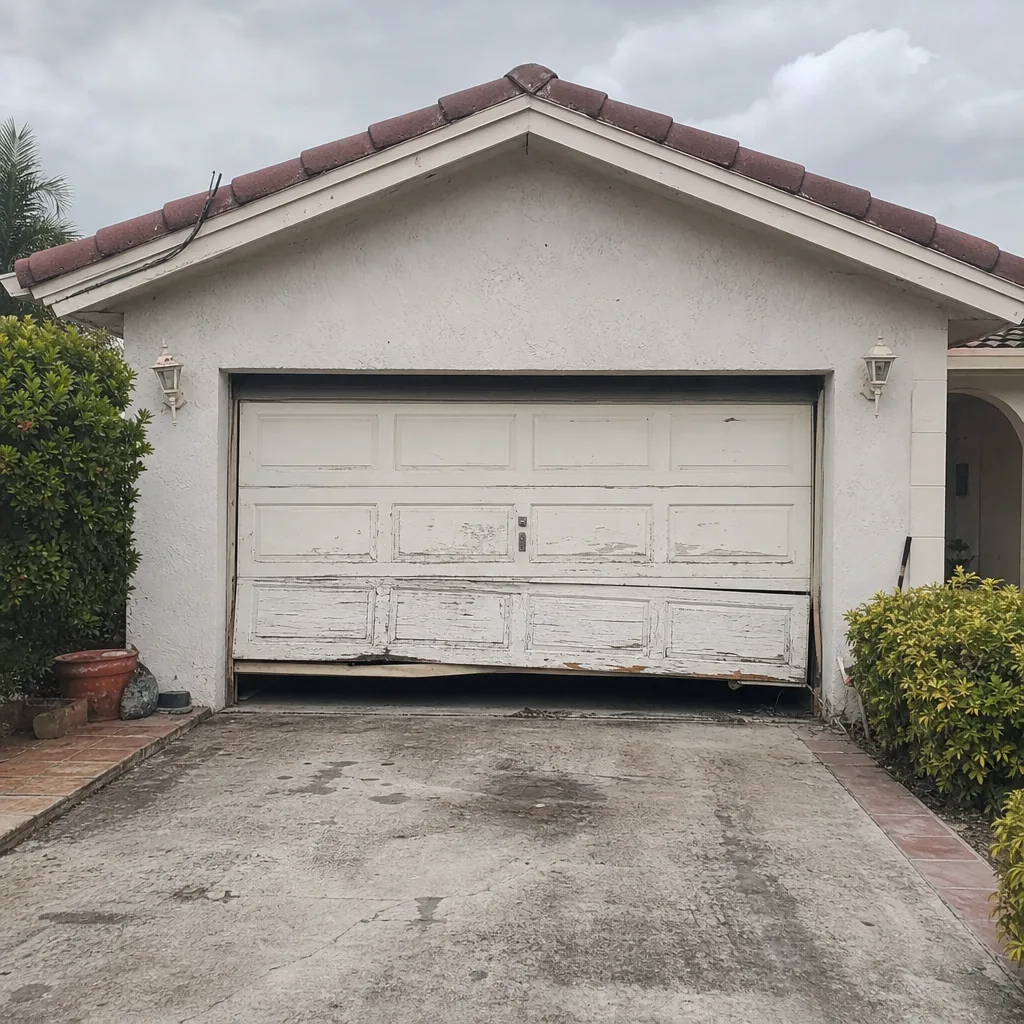 Before
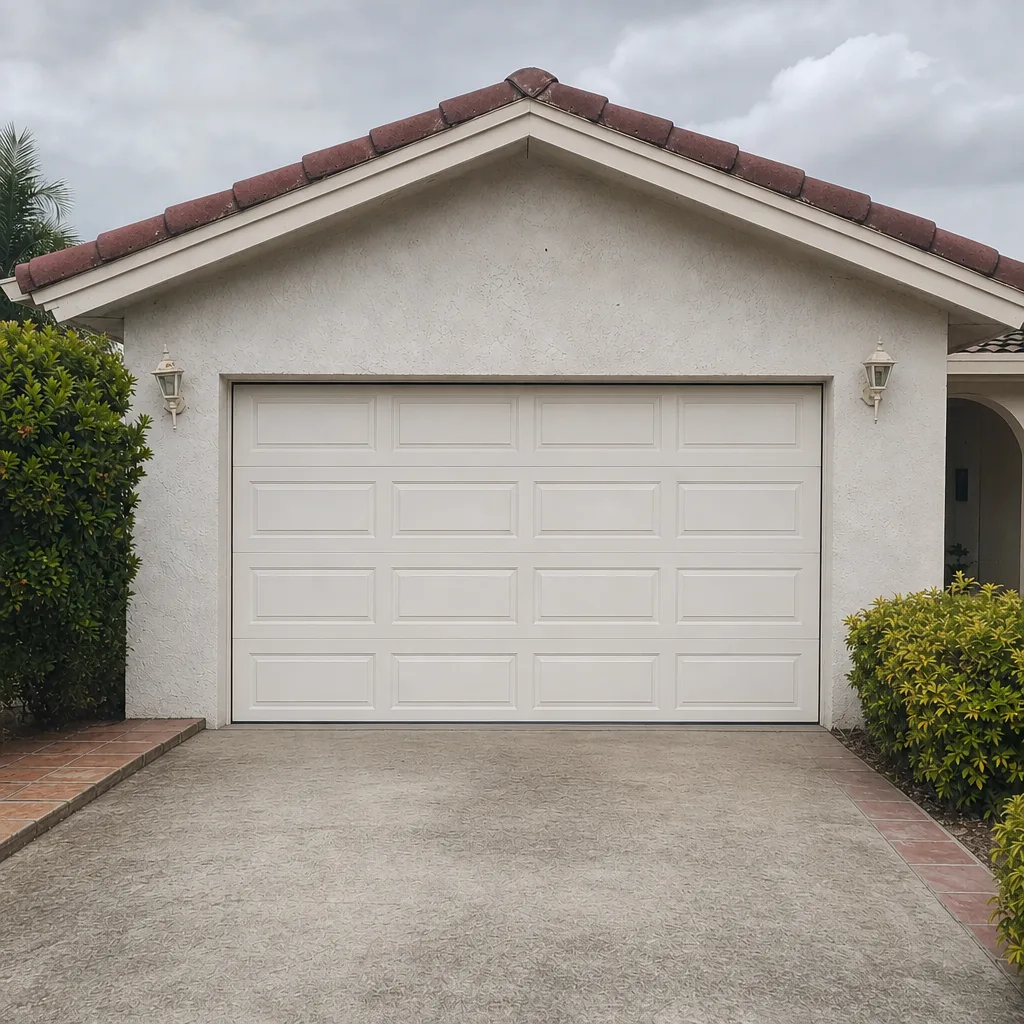 After
When to Call a Professional
Call us when a spring snaps, when the door falls off its track, when the opener clicks but doesn’t move the door, or when a fraying cable is visible. Call us before you buy a new door online without verifying the NOA, or before you sign with a contractor who isn’t familiar with Miami-Dade’s approval system. Call us if the door has become hard to lift, if it reverses for no reason, if the bottom seal is letting water in, or if you’re not sure whether the existing door is wind-rated. Emergency garage door service is a standing offering for us in Hialeah – if the door is stuck open at night or won’t close, that’s a security problem, and it’s exactly the kind of call we take seriously. Hialeah Garage Door Repair Co offers free estimates in Hialeah – call (833) 309-5115. Our technicians have up to 13 years of experience, and every quote is written and agreed before any work starts.
Frequently Asked Questions
Spring repair in Hialeah typically runs in a range that depends on the spring type, whether it’s a single spring or a matched pair, and how the door is set up. A matched pair costs roughly twice a single spring, and on most doors replacing both at once is the right call. We give a written estimate before any work starts, and the written estimate is the price. Call (833) 309-5115 for an exact quote – estimates are free.
Yes. A door that won’t close is a security problem, so we treat it as an emergency call and same-day service is our goal whenever we can schedule it. Call (833) 309-5115 and we’ll tell you what we can do today. If the door won’t open at all, don’t force it – a snapped spring or a fallen cable under tension is not something to push against.
Yes, in most cases a new or replacement garage door in Hialeah needs to be covered by a current Miami-Dade County Notice of Acceptance (NOA) at a pressure rating that fits your opening. The door model matters, and so does the anchoring system. Ask the Hialeah building department to confirm requirements for your address, and ask the manufacturer for the NOA before you buy.
“Hurricane-rated” usually means the door meets Florida’s high-velocity hurricane zone requirements and has the documentation to prove it. “Wind-rated” is a looser term that may or may not include the same approvals. In Hialeah, what actually matters is a current NOA at the right design pressure for your opening – the label on the marketing page is secondary to that documentation.
The local professional we connect you with is licensed and insured as their state requires. We ask that before every job, because on a trade where springs and cables store serious energy, credentials are part of the safety picture. Our technicians have up to 13 years of experience, and we work across LiftMaster, Chamberlain, Genie, Clopay, Amarr, Wayne Dalton, Craftsman and Raynor systems.
No. We quote in writing before any work starts, and the written estimate is the price. If we find something on-site that changes the scope – low headroom, damaged hardware, a safety item – we stop and tell you before we do anything that would change the price. Call (833) 309-5115 for a free estimate.
The Bottom Line
Hialeah garage doors live in a demanding environment, and generic advice doesn’t cut it. The four things to take away: first, NOA approvals decide which doors can legally go on your home, so check the paperwork before you buy. Second, our humidity attacks springs, cables and hardware faster than most guides acknowledge, and that affects both repair timing and material choice. Third, older Hialeah housing stock – much of it 1950s through 1980s – adds header, track and anchoring complications that need site inspection before installation. Fourth, repair versus replace is a real decision here, and a door that’s fine in a milder climate may not be fine in Hialeah. If you’d like a straight answer on your specific door, call us. Hialeah Garage Door Repair Co offers free estimates in Hialeah – call (833) 309-5115.
Written by the team at Hialeah Garage Door Repair Co.