Last updated November 21, 2026
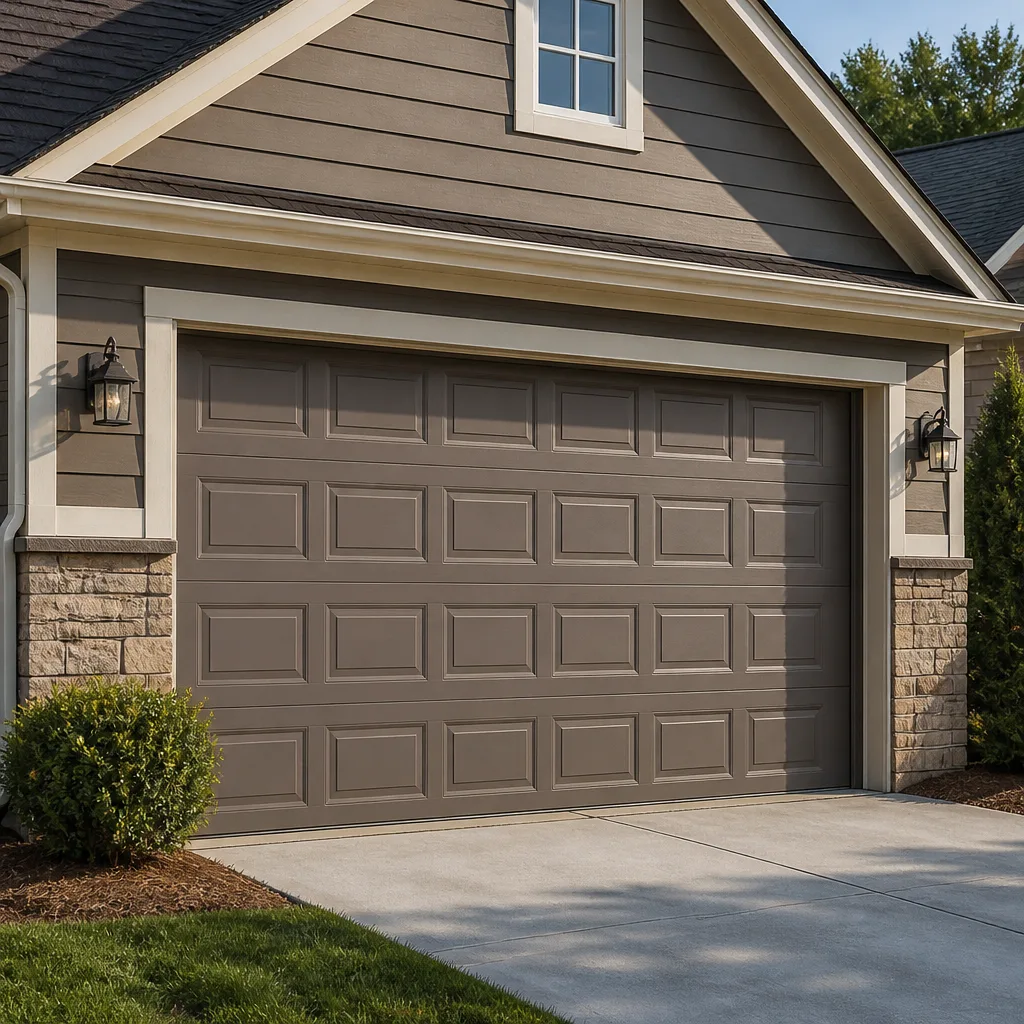 Raised-panel steel
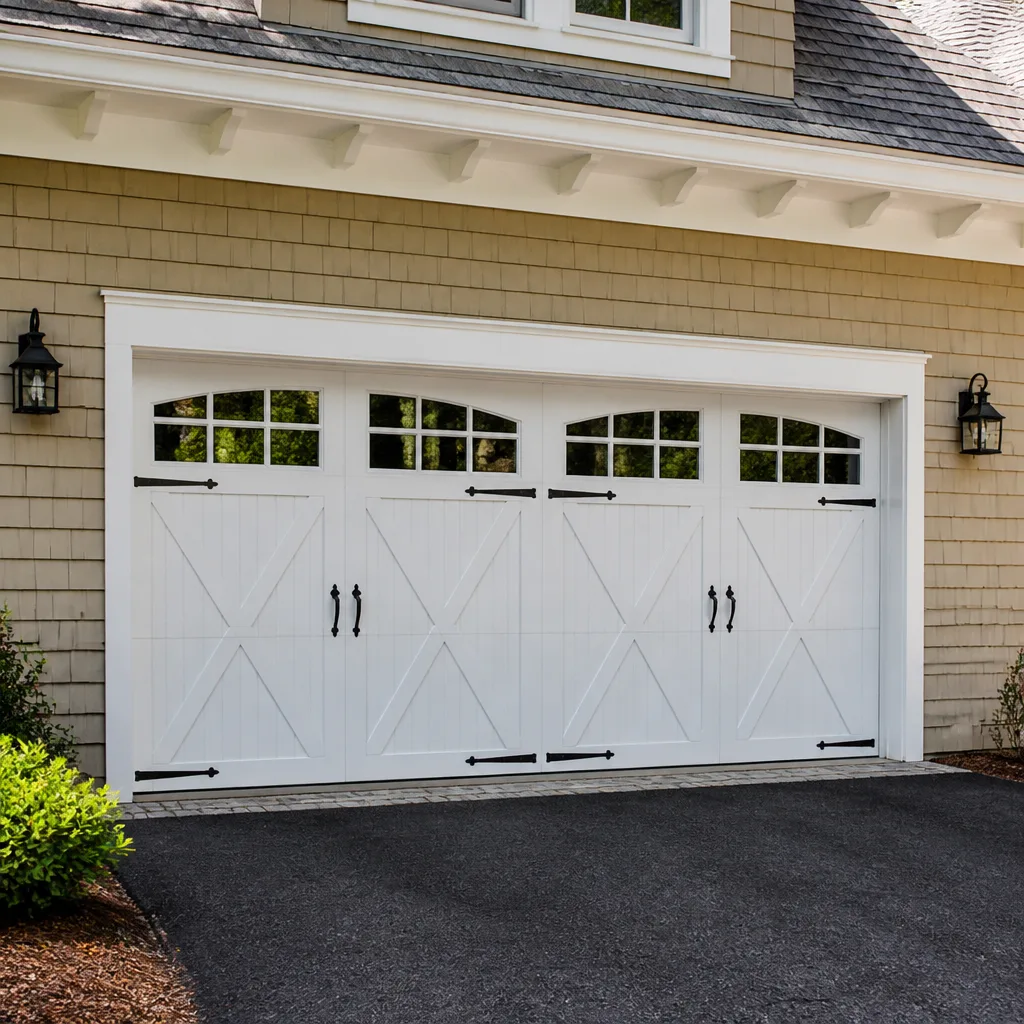 Carriage house
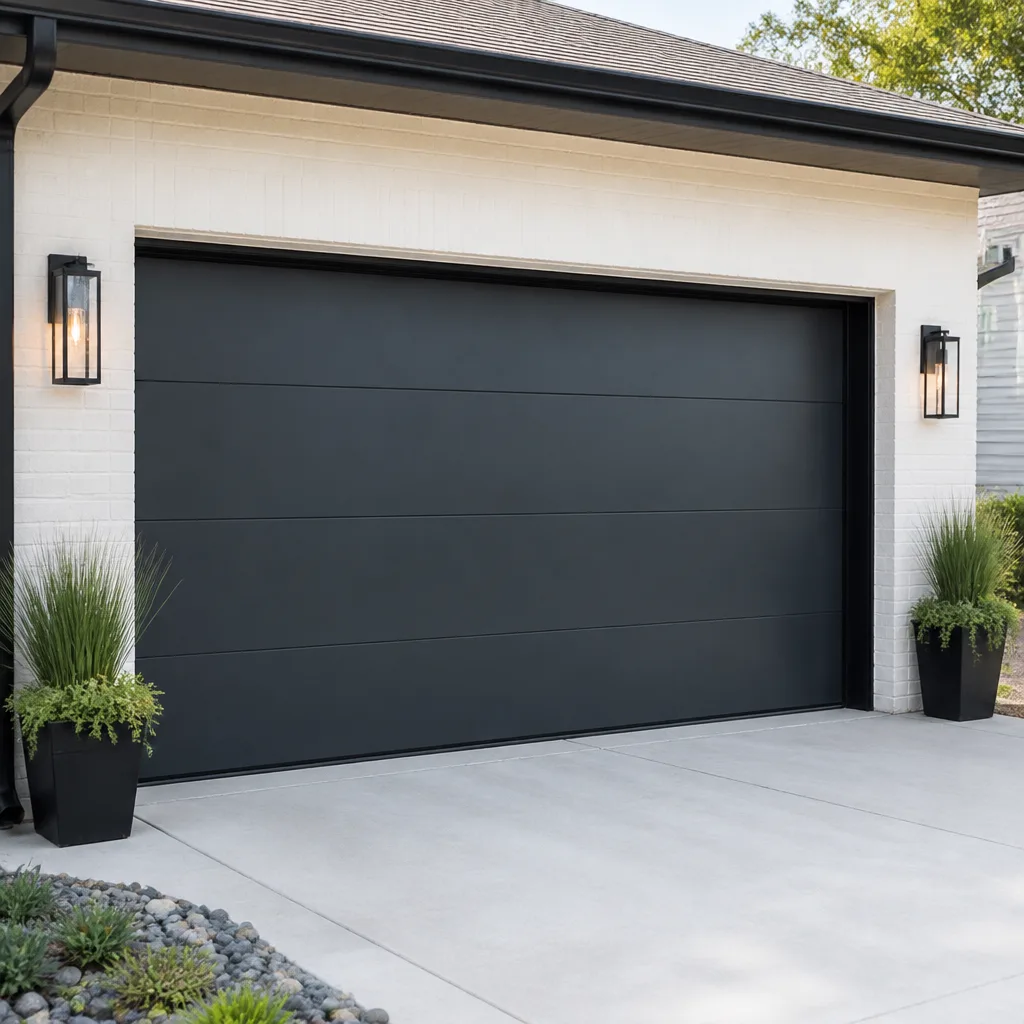 Modern flush
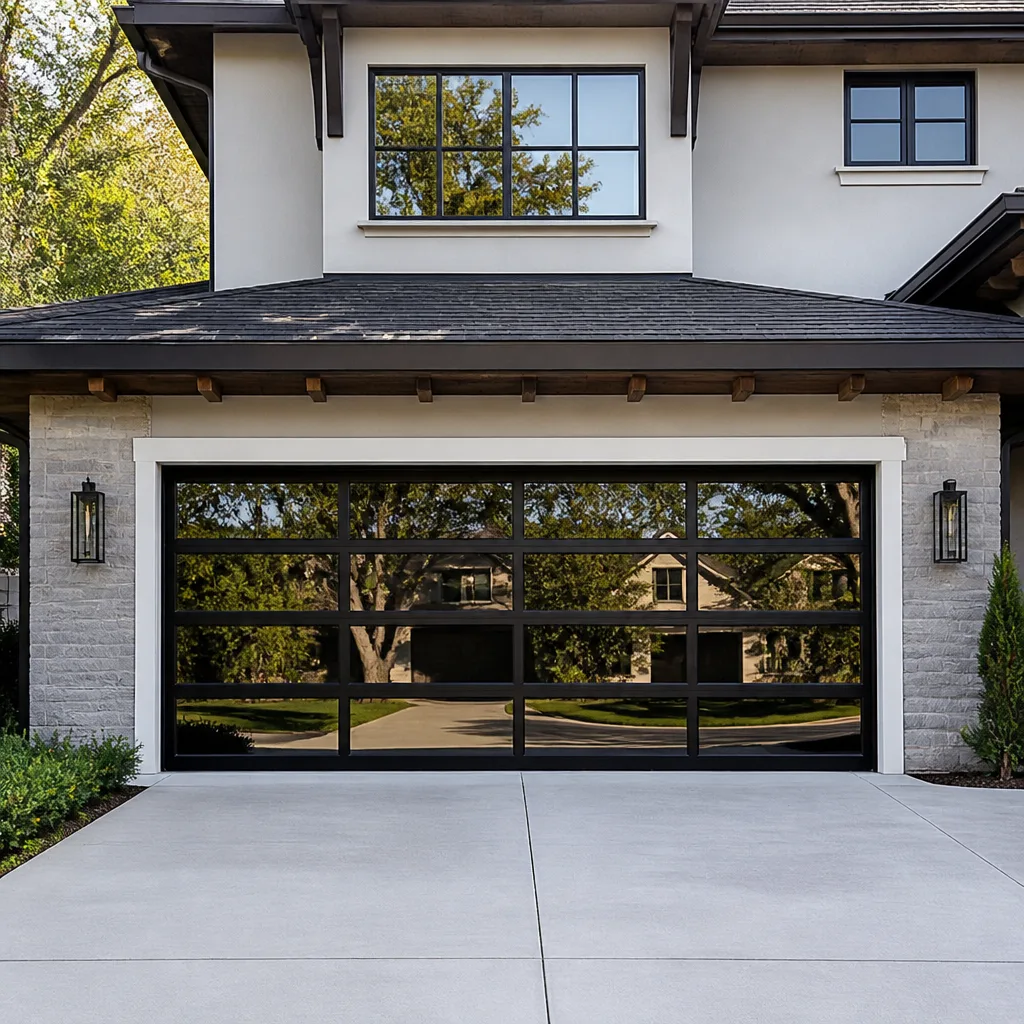 Full-view glass
 LiftMaster openers
 Chamberlain openers
Full 25-point door and opener safety check with every visit - springs, cables, rollers, tracks, and your LiftMaster or Chamberlain opener included
You get a price before we start. It does not change when the pro arrives.
Get your free estimateGarage Door Repair Troubleshooting in Hialeah: Common Problems and How to Fix Them
A door that won’t close gets blamed on the safety sensors almost every time. A grinding noise gets labeled an opener problem. Both guesses send a lot of Hialeah homeowners down the wrong road, buying parts they don’t need or tightening bolts that weren’t loose. The truth is that garage doors fail in a predictable chain, and each sound, jam or reversal points to a specific component once you know how to read it. Humidity plays a bigger role here than most troubleshooting advice accounts for, and it changes which parts wear first. This guide walks you through how to trace a problem back to its mechanical source, which tests are safe to run yourself, and how to hand your findings to a technician so the first visit solves something.
Quick Answer
Most garage door failures in Hialeah come down to one of five sources: a broken spring, a worn roller or hinge, a misaligned track, a safety sensor or opener logic fault, or a door that has gone out of balance. You can safely check sensors, test balance, and look at the springs and tracks to narrow down which one it is. Spring and cable work is dangerous and belongs with a trained technician, who can confirm the diagnosis on the first visit and quote a fixed price before starting.
Styles & brands we work with
- Raised-panel steel
- Carriage house
- Modern flush
- Full-view glass
- LiftMaster openers
- Chamberlain openers
Table of Contents
- How garage doors actually fail, and why symptoms mislead
- The Hialeah humidity factor: corrosion that mimics other failures
- Symptom-to-component matrix: what each sound means
- The tests you can safely run before calling anyone
- Safe fixes versus dangerous ones
- Springs and cables: why we handle these ourselves
- How to brief a technician so the first visit counts
- Keeping a Hialeah door healthy year to year
How garage doors actually fail, and why symptoms mislead
A garage door isn’t one machine. It’s a system: springs store the energy, cables transmit it, rollers and hinges carry the door along the tracks, and the opener only supplies a nudge on top of all that. When any part of the system weakens, the door often shows a symptom somewhere else entirely. That’s why a door that reverses on the way down looks like a sensor problem but can be an out-of-balance door triggering the resistance safety in the opener.
In Hialeah, this layered failure pattern shows up constantly. The climate is warm and wet for most of the year, which means rubber seals, rollers, hinges and spring hardware age differently than in drier parts of the country. A door that was balanced fine in the spring can drift out of balance as humidity swells the wood framing or loosens hardware at the track brackets.
Here’s the mental model that helps:
- The spring and cable handle the door’s weight. If they weaken, the door gets heavy and the opener strains.
- The rollers and hinges handle movement. When they wear, the door drags, rattles, or binds.
- The tracks handle alignment. When a bracket shifts, the door scrapes or sticks in one spot.
- The sensors and opener handle control. When they fail, the door reverses, refuses to move, or moves in the wrong direction.
Most of what we see on service calls in Hialeah starts with the first three and only shows up as a fourth. Recognizing that saves you from replacing an opener when the real problem is a tired spring or a bent track.
The Hialeah humidity factor: corrosion that mimics other failures
South Florida humidity is hard on the small metal parts of a garage door. Where a drier climate might let a hinge or cable drum last many years, constant moisture accelerates rust and seizes the pivots that should move freely. The result is a door that grinds, sticks, or hesitates, and the owner assumes the opener is failing when the rollers and hinges are the ones fighting back.
Torsion spring hardware is a particular case. Springs themselves don’t rust much, but the brackets, drums, and set screws that anchor them can corrode and loosen over time. A drum that slips a fraction of an inch changes the cable tension and makes the door travel unevenly. That shows up as a door that binds partway up, reverses near the floor, or looks crooked when it’s closed. A technician who hasn’t worked in this climate might look straight at the sensors. We look at the spring hardware first.
How to spot corrosion versus a mechanical fault without touching dangerous parts:
- Look for orange or white powdery deposits around hinges, roller stems, and the bottom brackets. That’s active corrosion.
- Check whether the door moves smoothly by hand (with the opener disconnected) or feels tight and jerky.
- Watch the door from the side as it opens. A wobble or uneven gap at the top means one side is lagging, which points at cable tension or a drum.
- Listen for a scrape that sounds metallic and continuous versus a thud that repeats at a set interval. Metallic usually means a roller or hinge. A repeating thud often means a track or bracket.
If you find corrosion on the spring hardware, don’t try to loosen or adjust it. Contact garage door spring repair specialists who have the right tools to take tension off the system safely before working on it.
Symptom-to-component matrix: what each sound means
Sounds are the fastest diagnostic tool you have. Each one points at a specific part of the system, and once you match the sound to the component, you can describe it accurately when you call. Here’s a table of the sounds we hear most in Hialeah and what they usually mean.
| Symptom | Likely component | What it tells you |
|---|---|---|
| Grinding while the door moves | Rollers or hinges | Worn bearings or seized pivots; often corrosion-driven in humid months |
| A loud pop or bang followed by a door that won’t lift | Torsion or extension spring | A spring has failed; the opener can’t lift the door alone |
| Scraping or squealing along one side | Track or roller | A track has shifted or a roller has come out of the channel |
| Rattling at the top of travel | Hinges or opener rail | Loose fasteners or a worn trolley; check brackets first |
| Door reverses just before the floor | Sensors or balance | Either a blocked or misaligned sensor, or the door has become too heavy |
| Opener hums but door doesn’t move | Opener gear, capacitor, or chain | Often a stripped gear on older units, or a detached trolley |
| Door won’t stay closed without holding the button | Sensor alignment or logic | The opener’s safety circuit is being interrupted |
Notice how many of these point to the door itself rather than the opener. That’s the pattern that keeps showing up in Hialeah, and it’s why we treat garage door repair as a whole-system job rather than a parts swap.
The tests you can safely run before calling anyone
Some checks you can do in five minutes with no risk. Others can hurt you. The line between the two is simple: anything involving spring tension, cables, or the torsion bar is off limits. Everything else on this list is fine.
- Test the safety sensors. With the door open and the opener engaged, wave a hand or a long object in front of each sensor lens. If the opener doesn’t react, the sensor or its wiring has a problem. Check for dust and spider webs first, since both interfere with the beam.
- Check the sensor alignment. Most sensors have a small indicator light. If one blinks and the other is steady, they aren’t aligned. Nudge the bracket until both are steady. If the light never steadies, the sensor or wiring may have failed.
- Test the balance. Close the door, pull the release cord to disconnect the opener, then lift the door by hand. It should open smoothly with modest effort and stay put when you let go about halfway up. If it feels heavy or drops, the springs are weak or the door is out of balance.
- Look at the tracks. Stand back and check that both tracks are straight and parallel. Look for dents, dirt buildup, or loosened brackets where the track attaches to the wall.
- Check the wall control and remotes. If the wall button works but the remote doesn’t, the issue is likely in the remote battery or the opener’s receiver, not the door.
- Inspect the rollers. Look at each roller and check for flat spots, cracked nylon, or missing bearings. You can do this visually with the door closed and the opener disconnected.
If the balance test reveals a heavy door, don’t keep testing. Put the release cord back, close the door by hand with help if needed, and stop using the opener until a spring specialist sees it. Note what you found. You’ll use it in the call.
Safe fixes versus dangerous ones
The division between what you can fix yourself and what you shouldn’t touch is more clear-cut than most advice makes it. The rule of thumb we give every Hialeah homeowner is this: if the repair involves the door moving on its own under stored energy, it’s a technician’s job. If it involves a stationary part and no stored energy, it’s reasonable to handle yourself.
Safe to do yourself:
- Cleaning and aligning sensors, and replacing sensor batteries where applicable
- Vacuuming dirt and debris out of the tracks with the door closed
- Wiping down rollers and hinges and applying a proper garage door lubricant
- Tightening visible, accessible bracket bolts that aren’t under spring load
- Replacing remote batteries and re-pairing remotes to the opener
- Clearing obstructions that block the door’s path or the sensor beam
Not safe to do yourself:
- Loosening, adjusting, or replacing anything on the torsion bar or extension springs
- Touching the cables, drums, or bottom brackets that hold cable tension
- Adjusting the opener’s force or travel limits without understanding the safety implications
- Straightening a track that has bent in a way that affects the spring anchor
- Taking the door off the tracks to work on it alone
The reason spring work is on the danger list is simple physics. A wound torsion spring stores enough energy to move the door and, if released uncontrolled, to injure a person in its path. That energy stays in the system even when the door is closed. A trained technician knows how to take the tension off safely with the right winding bars and how to test afterward. That’s a step no homeowner should try to shortcut.
Springs and cables: why we handle these ourselves
Spring and cable failures are the most common reason a door suddenly stops working in Hialeah, and they’re the ones we never suggest any homeowner try to solve alone. A snapped torsion spring makes a loud bang, and afterward the opener will run but the door won’t lift because the opener was only ever meant to assist, not lift the full weight. A snapped cable usually shows up as a door that hangs crooked on one side or a loud snapping noise during operation.
Our approach is deliberate: the technician comes with the right tools, takes tension off the system before working, replaces the spring or cable, and tests the door through a full cycle before leaving. When we work on a torsion system, we look at the surrounding hardware at the same time. A new spring on a drum that’s already corroded will cause future problems, and it’s cheaper to address both in one visit than to come back in a few months.
We work on spring and cable systems across all the major residential door types, including doors from Chamberlain, Genie, Clopay, and Amarr. Brand familiarity matters here because the anchor pattern, drum style, and door weight determine how the spring is rated. If we’re working on a LiftMaster or Genie opener at the same time, the technician already knows the force settings and travel limits that unit expects, which matters after a spring change.
For a spring problem, don’t wait for the door to fall. Call (833) 309-5115 and describe what happened, and we’ll get a technician out. Emergency service is a standing part of what we do, so a snapped spring early in the morning or late in the day is still something we plan for.
How to brief a technician so the first visit counts
You’ve done the checks, you know roughly what’s happening, and now you want the technician to make progress on the first visit rather than spend it exploring. The single biggest thing you can do is describe the symptom precisely and share what you already tested. That shortens the diagnostic phase and gets to the fix faster.
- State the symptom, not the diagnosis. “The door reverses about a foot above the floor and the opener light blinks” is far more useful than “I think the sensors are broken.”
- List the tests you ran and what they showed. “Balance test: door drops when I let go halfway up.” “Sensor test: LEDs stay steady but door still reverses.” Those two lines tell the technician a lot.
- Note any sounds and when they happen. “Grinding only at the top of travel” points to a different component than “grinding the whole way up.”
- Mention your door’s brand and opener brand. LiftMaster, Chamberlain, Genie, or Craftsman openers have different diagnostics, and the technician can prepare accordingly.
- Say whether it’s a repair or an installation question. A door that needs full replacement is a different visit than a repair, with a measure and written estimate up front.
When we show up with this kind of brief, we can usually confirm the cause within the first few minutes and quote a fixed price before any work starts. That’s the standard we hold to. Nothing on the invoice should surprise you, and if the scope changes, the change gets talked through before anyone touches the door.
Keeping a Hialeah door healthy year to year
A little routine attention goes a long way in this climate. The point of prevention isn’t to avoid every repair; it’s to keep the door from getting trapped in a failure cascade. A seized hinge turns into a strained opener. A loosened bracket turns into a misaligned track. Both are cheaper to prevent than to repair.
Here’s what we suggest to Hialeah homeowners as a simple yearly routine:
- Lubricate rollers, hinges, and the torsion bar bearings with a proper garage door lubricant, not WD-40 or grease meant for other machinery.
- Run the balance test quarterly. Door should feel light and stay in place halfway up with the opener disconnected.
- Look for rust and corrosion on hinges and spring hardware, especially after the wetter months.
- Clean the sensor lenses and check that both indicator lights are steady.
- Look at the tracks from the side. They should be straight and evenly spaced top to bottom.
- Watch the door from outside occasionally. A crooked close or a fast slam means it’s time for a service call.
- Have the door serviced by a technician once a year if it gets daily use.
There’s a difference between a small tune-up and a full repair, and the routine above mostly helps you spot when you’re crossing from one to the other. When you do need an garage door opener repair or a spring service, we’re set up to handle both in one visit. That includes Wi-Fi-enabled LiftMaster and Chamberlain systems, which live in a lot of newer Hialeah homes and need a technician who understands connected diagnostics.
Common Mistakes to Avoid
- Blaming the sensors for every reversal. Sensors do cause a lot of problems, but an out-of-balance door or a strained hinge can trigger the same safety reversal. Test the balance before you buy a new sensor kit.
- Loosening a spring anchor to stop a noise. That’s how people get hurt. If the noise is coming from the spring area, call a technician before you touch anything.
- Ignoring corrosion in humid months. Small rust spots on hinges and brackets get worse, not better. In Hialeah’s humid climate, treat rust like an early warning, not a cosmetic issue.
- Adjusting the opener’s force to compensate for a heavy door. That’s masking a spring problem. The opener shouldn’t be lifting the door’s full weight.
- Replacing an opener to fix a mechanical issue. If the door binds or drops, the opener is often fine. Diagnose the door first, then look at the opener.
- DIY spring replacement using online tutorials. The winding process requires specific tools and a specific sense of the stored energy. No video substitutes for that.
- Skipping lubrication because the door still “works fine.” Sticky rollers in humid months create binding that leads to opener strain. A few minutes each season prevents that.
See the difference
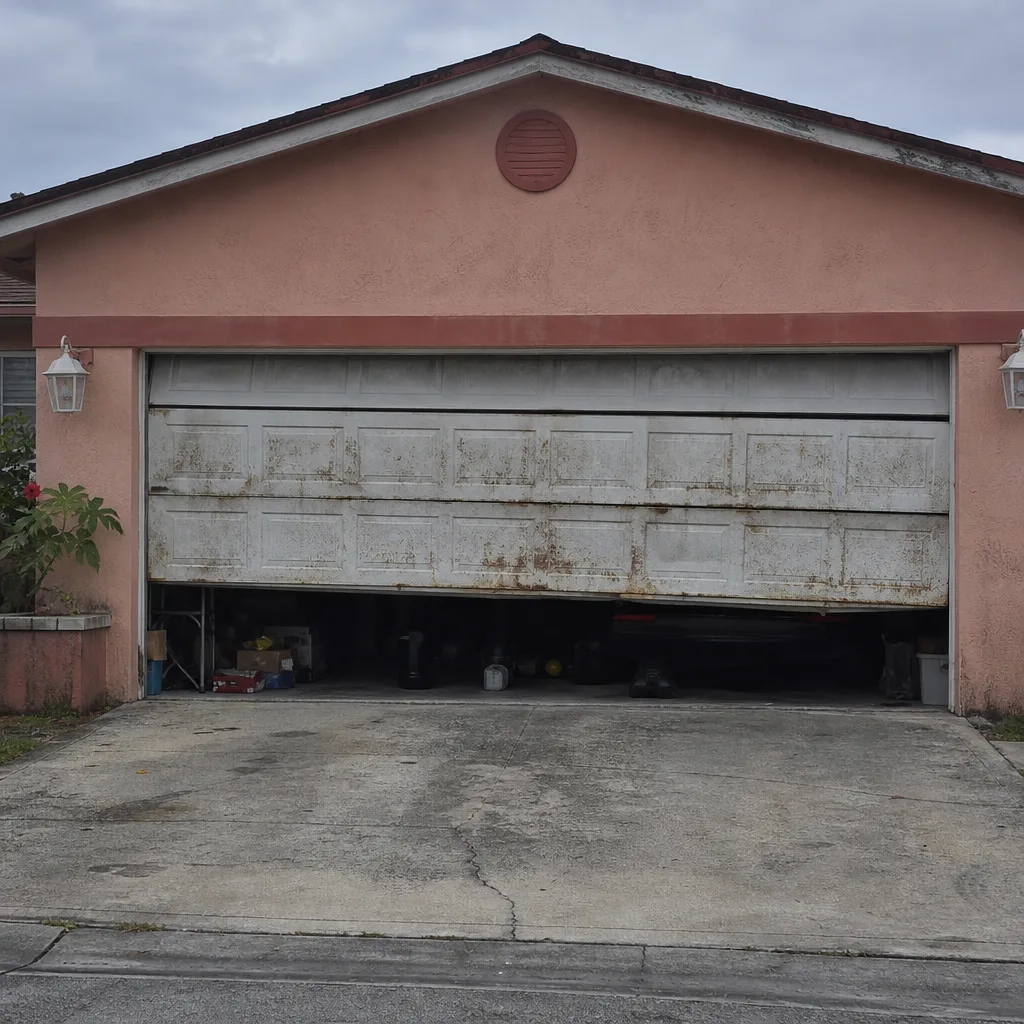 Before
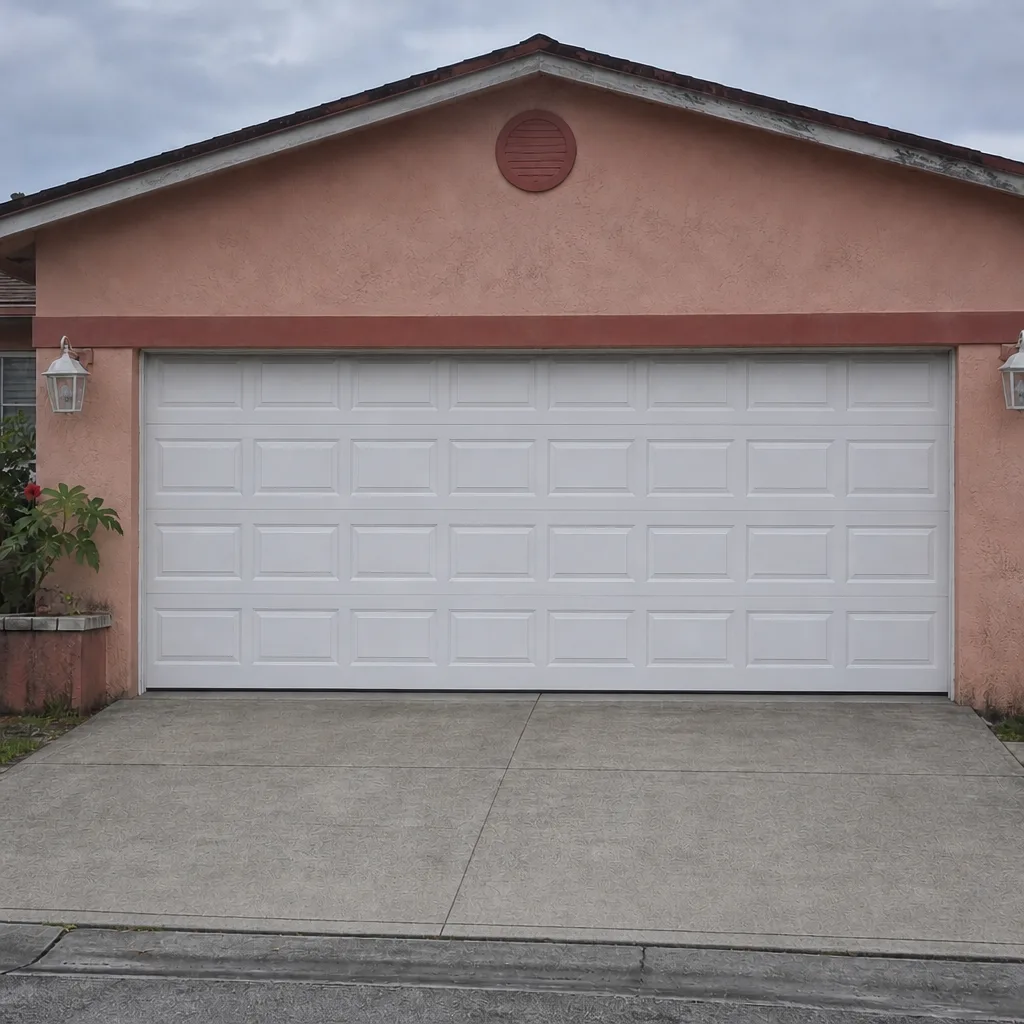 After
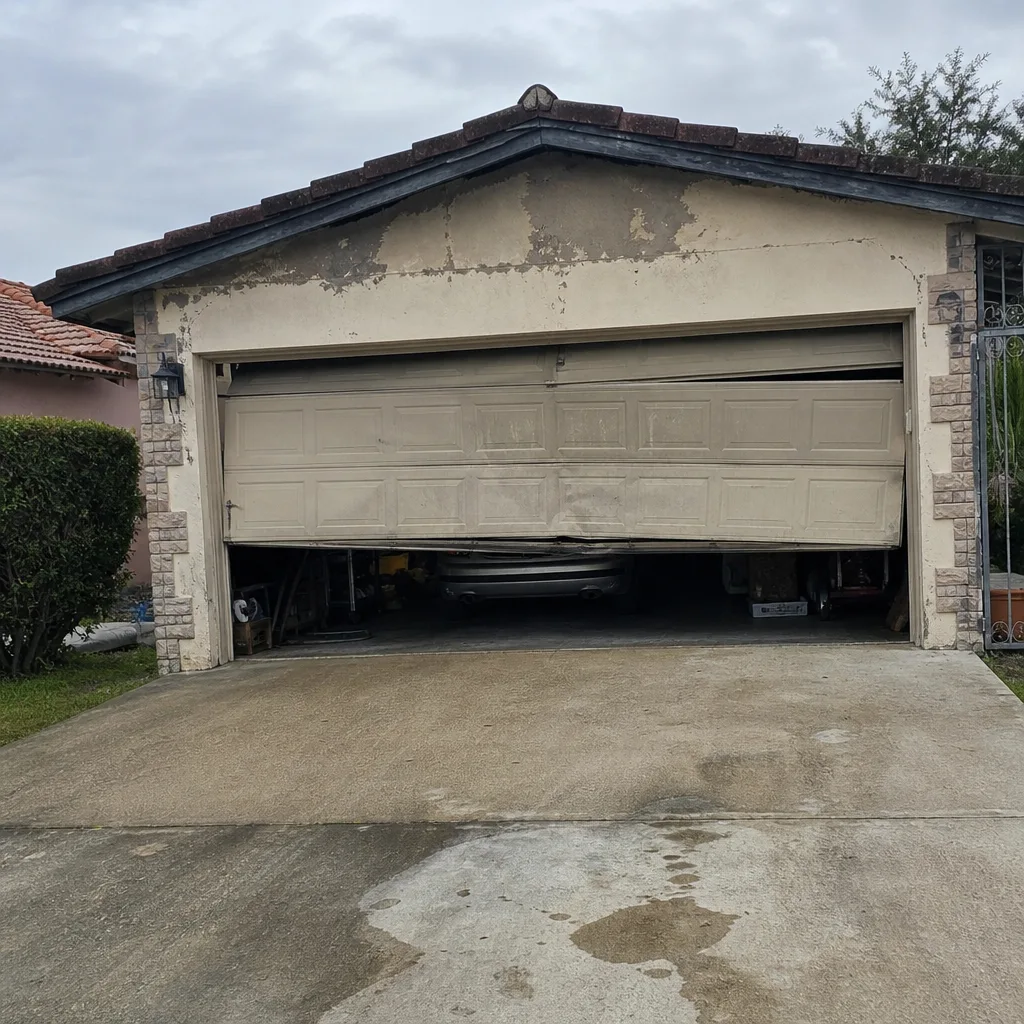 Before
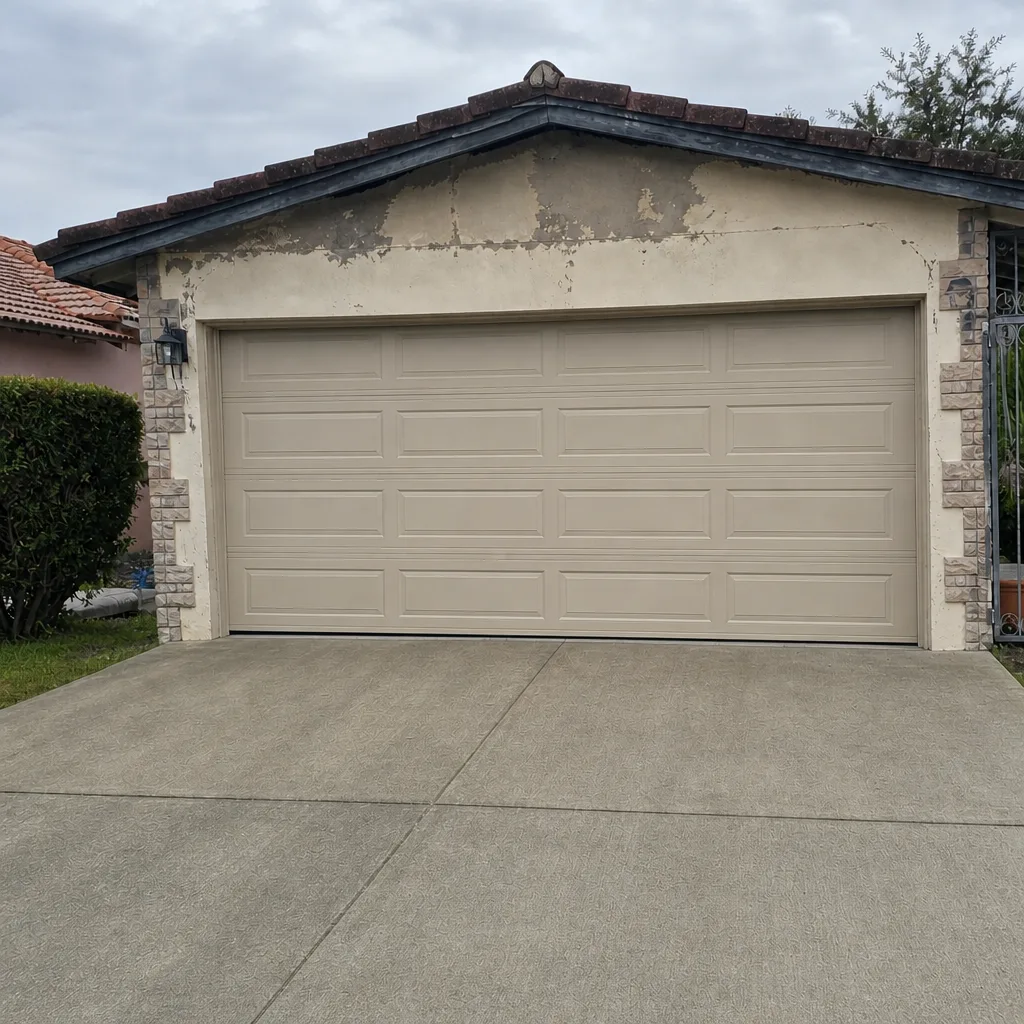 After
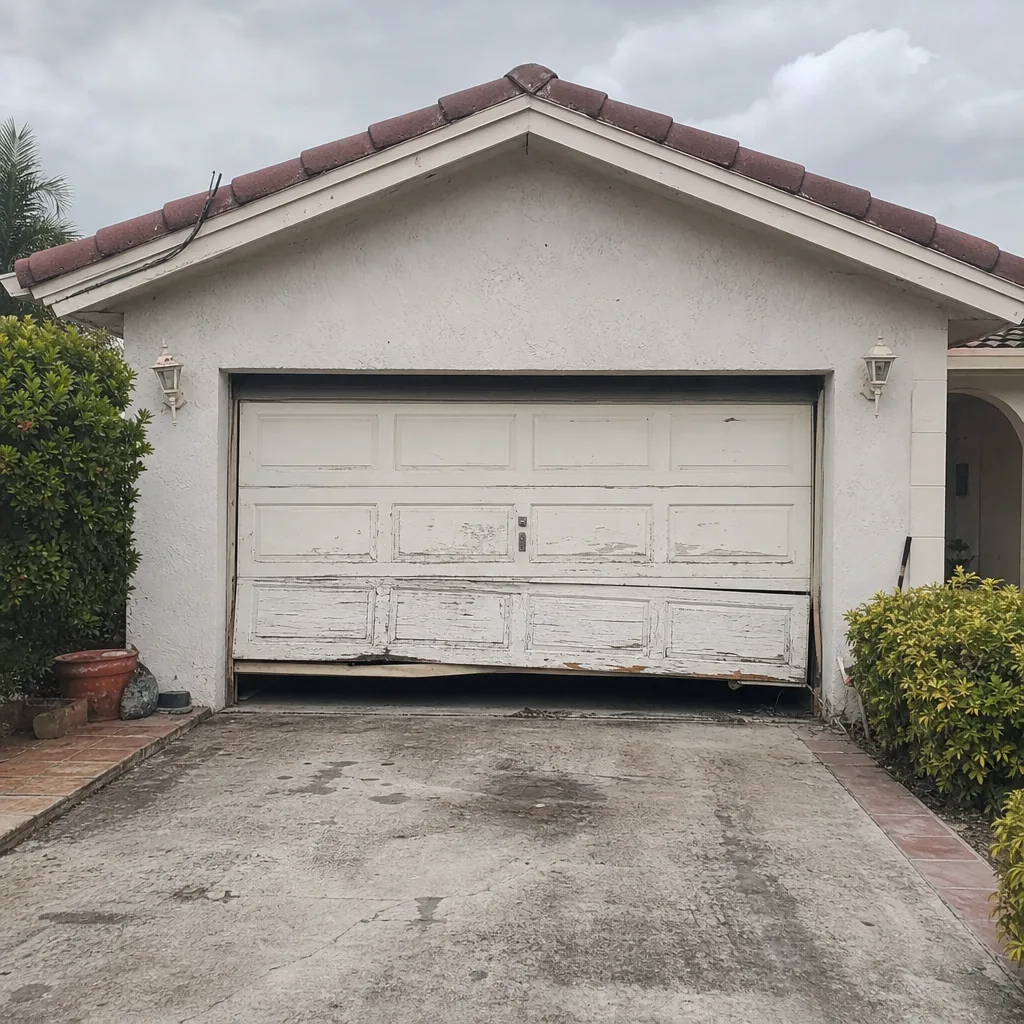 Before
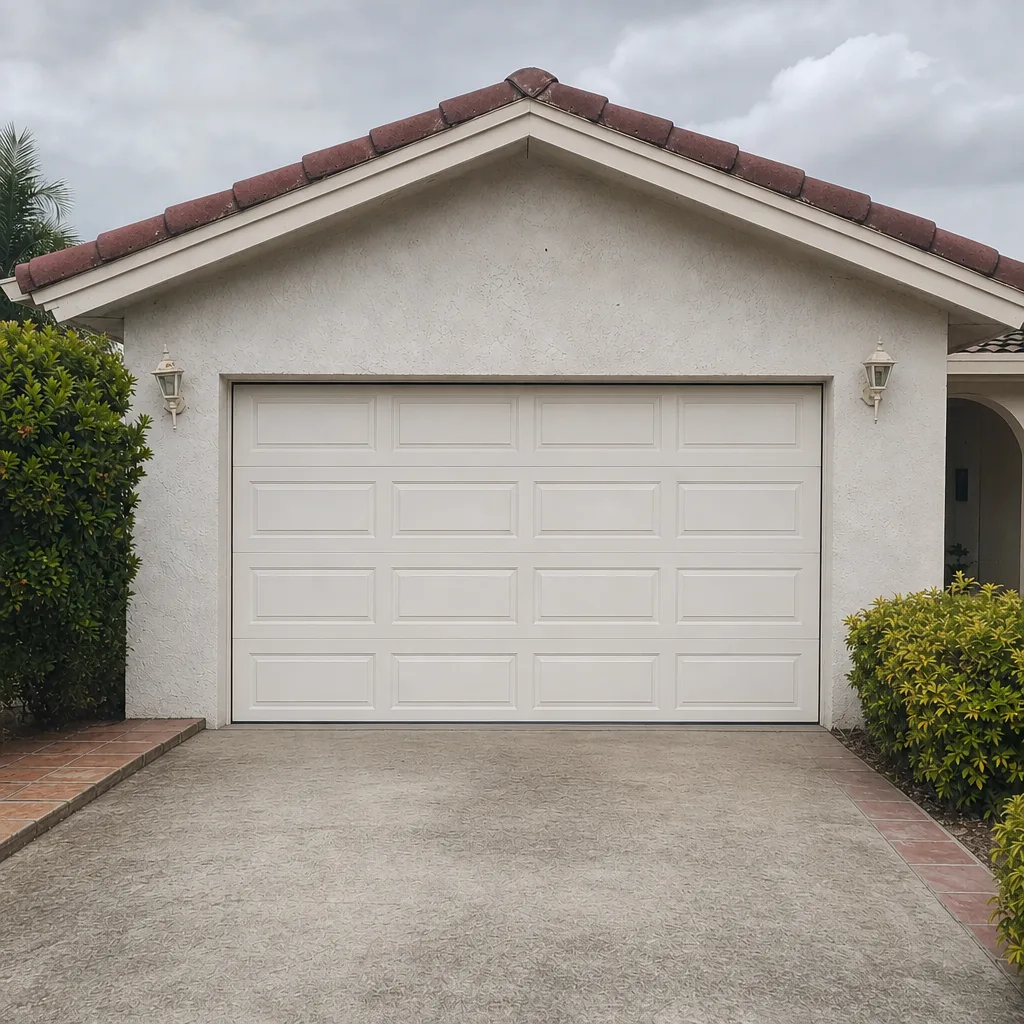 After
When to Call a Professional
Some repair work is fine to handle yourself, but there’s a line. Call a professional the moment you find any of these:
- A snapped or visibly deformed spring (the door stays shut until it’s fixed)
- A door that hangs crooked or drops hard when disconnected from the opener
- Any snapped, frayed, or loose cable
- A door that reverses even after you’ve cleaned and aligned the sensors
- A grinding noise that persists after lubrication
- A track that has pulled away from the wall or bent out of alignment
- An opener that runs but doesn’t move the door, or hums without moving
Any one of those is a sign that the door needs a trained eye. Hialeah Garage Door Repair Co offers free estimates in Hialeah. Call (833) 309-5115 and describe what you found. Our technicians have up to 13 years of experience and work across LiftMaster, Chamberlain, Genie, Clopay, Amarr, Wayne Dalton, Craftsman, and Raynor, so they’ll recognize your door and your opener immediately. If it’s an emergency, emergency service is available and we’ll schedule you for a visit.
Frequently Asked Questions
It’s about evenly split between the sensors and an out-of-balance door. If both sensor lights are steady and the beam isn’t blocked, run the balance test with the opener disconnected: if the door feels heavy or drops when you let it go halfway up, the springs are the problem, not the sensors. Call (833) 309-5115 if the balance test points at the springs, and we’ll send a technician.
Single-spring replacement in Hialeah typically runs $180 to $340 for one spring, and since matched springs are usually replaced in pairs, plan on roughly double for a pair. That range covers the spring, the labor, and the safety test, and it assumes standard residential hardware. If the drums or cables need work at the same time, that’s a separate line item in the written estimate. Call (833) 309-5115 for an exact quote, and estimates are free.
In most cases, yes. Emergency garage door service is a standing part of what we do, and same-day appointments are usually available for doors that are stuck, hanging crooked, or won’t secure the house. Call (833) 309-5115 with your door and opener brand and a description of what happened, and we’ll confirm timing. The price is quoted and agreed before any work begins.
The local professionals we connect you with are licensed and insured as their state requires. We work with technicians trained across LiftMaster, Chamberlain, Genie, Clopay, Amarr, Wayne Dalton, Craftsman, and Raynor, so they arrive already familiar with your system. Call (833) 309-5115 to schedule.
Grinding at the top of travel points to the upper hinges, the top roller, or the opener trolley, not the tracks. Lubricate the hinges and roller stems with proper garage door lubricant and run the door once. If the noise continues, the hinge or top roller is worn or corroded. In Hialeah humidity, this is common even on doors that aren’t that old. Call (833) 309-5115 if it doesn’t clear after lubrication.
The written estimate we quote is the price you pay. If the scope changes after the technician diagnoses the door, that gets talked through with you before anything is done. Nothing on the invoice should come as a surprise. If the spring is broken and the drums are also worn, the technician will show you and quote the full job up front rather than handling it piecemeal.
Yes. Continuous humidity corrodes hinges, roller stems, and spring hardware faster than in drier climates, and it can swell the wood around the track brackets so the alignment shifts over time. That’s why we recommend lubrication every few months, and why we check the spring hardware on every spring service call in Hialeah.
The Bottom Line
Chasing symptoms is how most garage door calls end up costing more than they should. Trace the problem to its component first: test sensors, run the balance test, look at the tracks, and match the sound to the part. Anything involving springs, cables, or the torsion bar crosses the line into dangerous territory, and that’s where a trained technician is the right call, not a risk. In Hialeah, humidity speeds up wear on hinges and spring hardware, so treat corrosion as an early warning. When it’s time to bring someone in, describe what you found and it’ll be a productive first visit. Call Hialeah Garage Door Repair Co at (833) 309-5115 for a free estimate, and we’ll confirm the diagnosis and quote a price before any work begins. From a snapped cable to a full new door, we can handle it.
Explore more of what we do at Hialeah Garage Door Repair Co.
Written by the team at Hialeah Garage Door Repair Co.