Last updated November 21, 2026
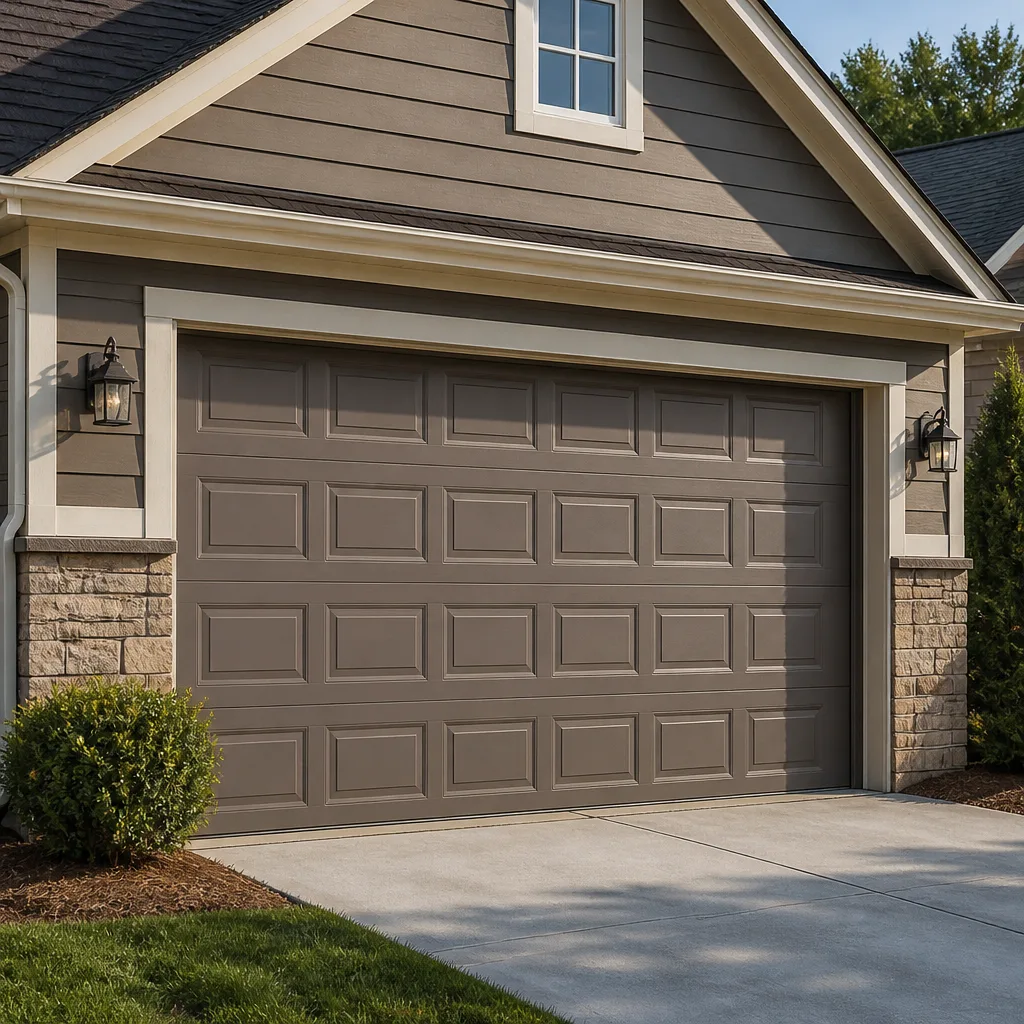 Raised-panel steel
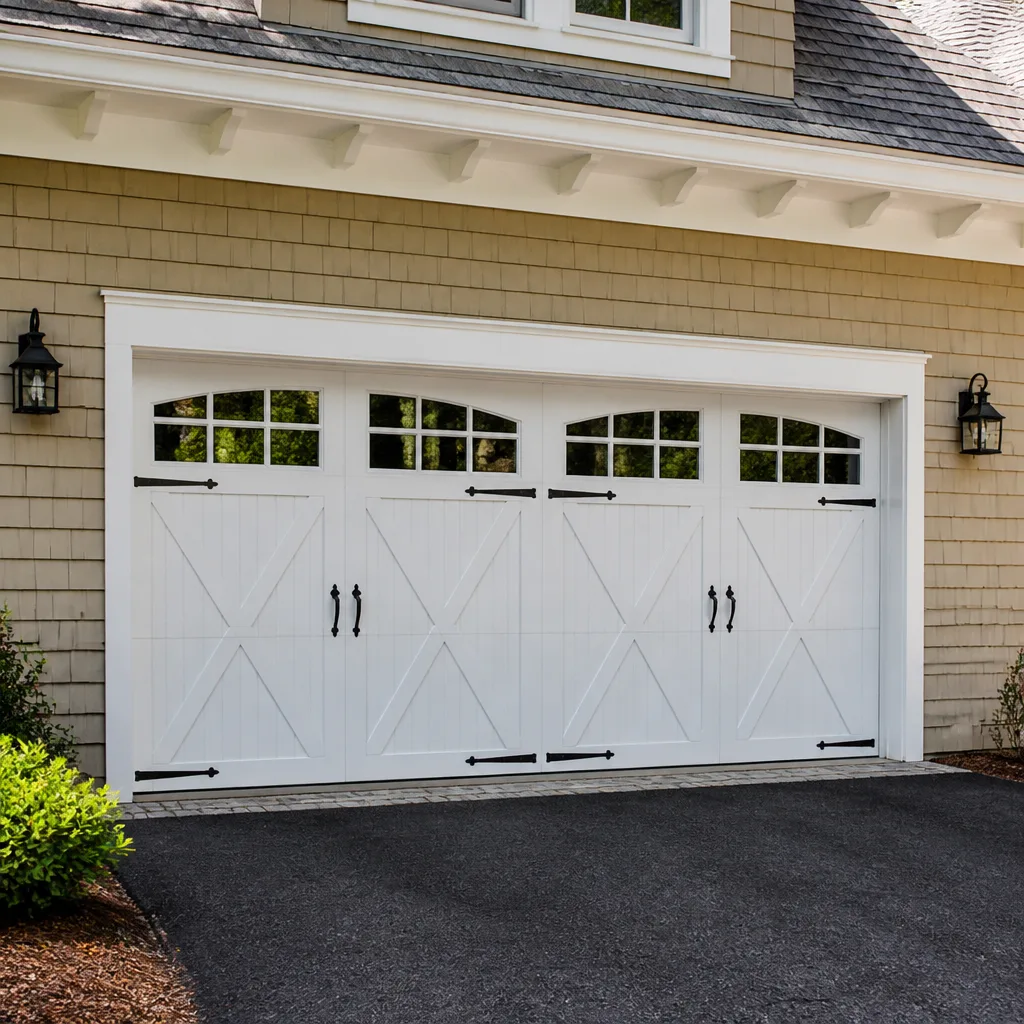 Carriage house
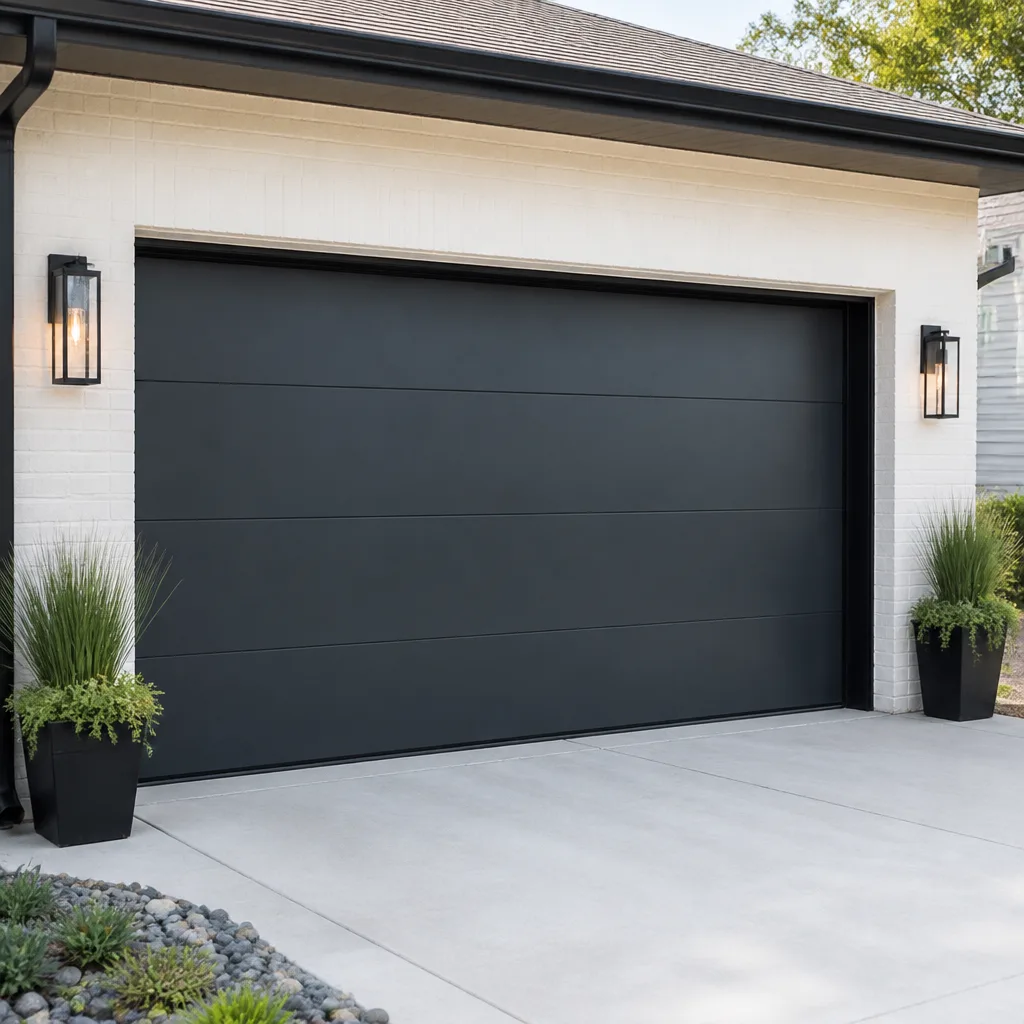 Modern flush
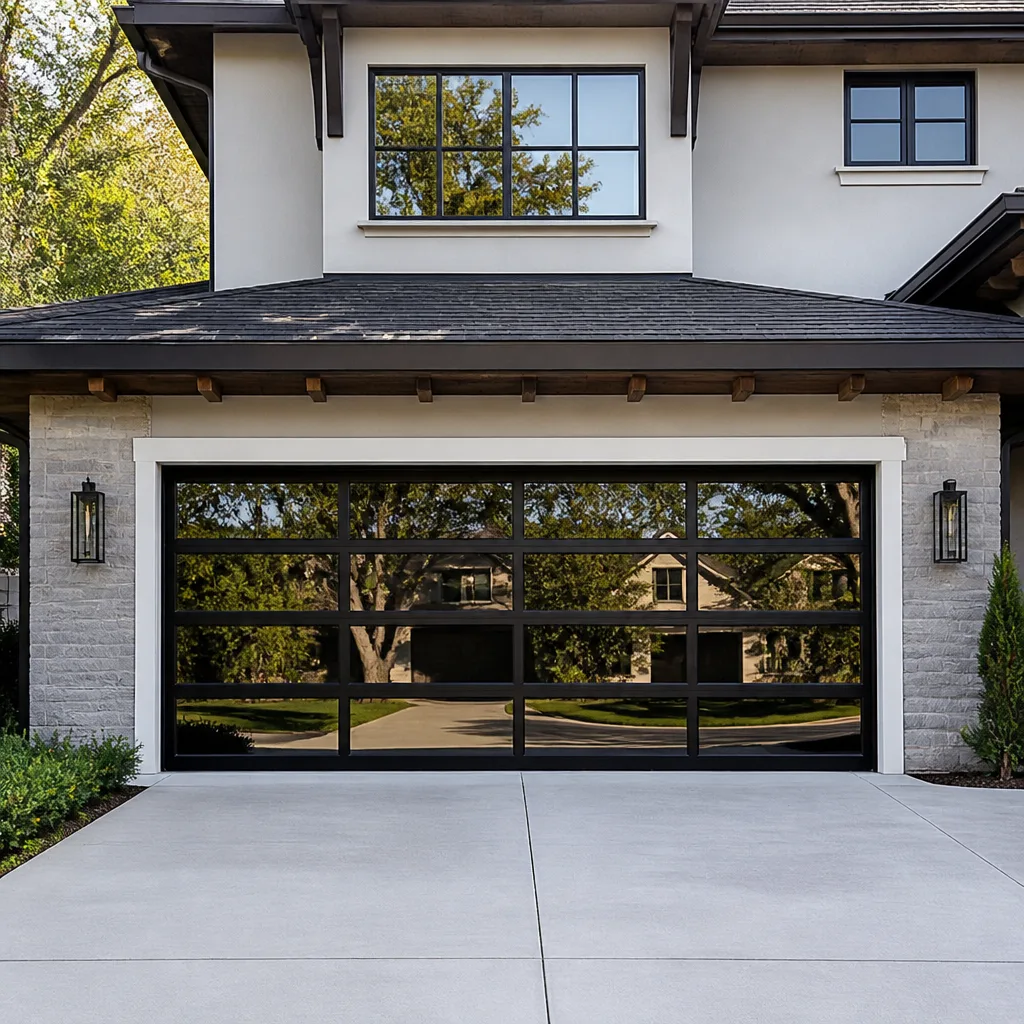 Full-view glass
 LiftMaster openers
 Chamberlain openers
Full 25-point door and opener safety check with every visit - springs, cables, rollers, tracks, and your LiftMaster or Chamberlain opener included
You get a price before we start. It does not change when the pro arrives.
Get your free estimateDIY vs Professional Garage Door: The Hialeah Homeowner’s Decision Guide
A torsion spring, wound to hold a door that weighs well over a hundred pounds, stores enough energy to injure you badly if it releases while your hands are near it. That’s not a lawyer’s disclaimer tacked onto the bottom of a service page. It’s a physics fact, and it’s the reason this guide draws a hard line instead of a fuzzy one. Some garage door work is genuinely fine for a careful homeowner. Some of it isn’t, no matter how many videos you’ve watched. In Hialeah, where the humidity is relentless and most of us are working with a concrete-block house and a door that has seen a decade of afternoon thunderstorms, that line matters. Below you’ll get a task-by-task breakdown, the permit and contractor question, and a real cost comparison for three common situations, so you can decide with clear eyes instead of guesswork.
Quick Answer
Weatherstripping, lubrication, sensor alignment and remote programming are safe DIY projects for a competent homeowner. Torsion spring work, cable and drum repairs, and structural panel replacement are not: they require specialty tools, and spring work carries serious injury risk. On top of that, garage door replacement and many repairs in Hialeah need a permit that calls for a licensed contractor, so those jobs aren’t just dangerous to attempt yourself, they can put you on the wrong side of the code.
Styles & brands we work with
- Raised-panel steel
- Carriage house
- Modern flush
- Full-view glass
- LiftMaster openers
- Chamberlain openers
Table of Contents
- The Three Tiers of Garage Door Work
- What a Careful Homeowner Can Do Safely
- What Requires a Licensed Technician
- Permits and Licensing: The Hialeah Legal Reality
- DIY vs Professional: A True Cost Comparison
- Why Hialeah’s Climate Changes the Calculation
- What to Do When You Start and Realize It’s Beyond You
- When to Call a Professional
The Three Tiers of Garage Door Work
Most decision guides treat “DIY vs professional” as a single question. It isn’t. Garage door work splits into three distinct tiers based on the physical danger and the code consequences, and knowing which tier a job falls into is the whole game.
The first tier covers maintenance and adjustment: the routine, low-energy tasks that keep a door tracking smoothly. The second tier covers component repair, where you’re dealing with springs, cables, drums and rollers under load. The third tier covers structural work, including panel and door replacement, which involves the full weight and spring tension of the assembly plus permitting.
Here’s how the tiers map out:
- Tier 1 (DIY-appropriate): Weatherstripping replacement, lubrication, sensor alignment, track cleaning, remote and keypad programming, visual inspection.
- Tier 2 (professional): Torsion and extension spring replacement, cable and drum repair, roller and hinge replacement under tension, opener motor and gear work.
- Tier 3 (professional plus permit): Panel replacement that affects structure, full door and track system replacement, any change that alters the opening or headers.
The mistake people make is jumping from a successful Tier 1 job straight into a Tier 2 repair. The two feel similar on a video because both involve a wrench. What the video doesn’t show is the stored energy in a torsion spring or the way a poorly seated cable can whip loose the moment the door cycles. Think of the tiers as a checklist, not a spectrum: if the job lands in Tier 2 or 3, that’s your answer, and skill level doesn’t move it into Tier 1.
We see the consequence of tier confusion pretty regularly on calls around Hialeah, where a homeowner has handled weatherstripping fine for years and then assumes a snapped spring is the same kind of project. It isn’t, and the two are separated by more than difficulty – they’re separated by whether the work can hurt you.
What a Careful Homeowner Can Do Safely
Plenty of garage door upkeep is within reach for someone comfortable with basic tools. Weatherstripping along the bottom of the door takes the worst of Hialeah’s afternoon downpours and sun, and a new seal is a straightforward swap with a flathead screwdriver and the right length of vinyl or rubber. Lubrication is another one worth doing yourself: a light application on the rollers, hinges and the spring once or twice a year keeps a door quieter and slows wear.
Sensor alignment is the classic DIY win. If your door reverses for no clear reason, the safety sensors near the floor on each side are usually the culprit – a spider web, a bump, or an object in the beam path. Wipe the lenses, check that the indicator lights on both units are lit steadily, and nudge them back into alignment. Remote and keypad programming is also homeowner-level work, especially on the smart-compatible LiftMaster and Chamberlain units where the pairing process is documented in the manual.
For the record, the safe DIY list is short:
- Replacing bottom weatherstripping and side seals.
- Lubricating rollers, hinges, springs and pivot points.
- Cleaning and aligning the safety sensors, and checking the auto-reverse.
- Programming remotes and keypads per the opener manual.
- Cleaning tracks and clearing debris, without loosening the track brackets.
- Visual inspection of cables for fraying and panels for dents or cracks.
One caution even here: never loosen a track bracket or adjust the torsion spring to “quiet” a door. Those adjustments look small and are not. If a cleaning or lubrication job reveals a frayed cable or a visible spring gap, that’s your signal the job has moved up a tier, and you stop and reassess.
What Requires a Licensed Technician
The line sits at anything holding stored energy or structural load. A torsion spring stores energy proportional to the door’s weight, and the tools to manage it – winding bars sized to the spring, a proper bench, a controlled release method – aren’t in a homeowner’s toolbox. Cable and drum repairs carry the same risk: a cable that slips can whip with enough force to break a hand or worse. We treat garage door spring repair as a safety-critical specialty for exactly this reason, not because it’s difficult to describe but because it’s genuinely dangerous to perform without the right training and equipment.
Structural panel replacement and full door replacement land here too. A panel swap on a sectional door involves freeing the panel from a track system under tension, and a full replacement means removing the whole assembly and spring system, then re-tuning everything so the door balances and the opener isn’t fighting it. Brand familiarity matters here: the way a Wayne Dalton panel seats and a Raynor track handles are different, and knowing that shortens the job and reduces the chance of a misaligned door on the first cycle.
Opener motor, gear and logic board failures also belong to a technician. Modern LiftMaster and Chamberlain openers pack a lot of electronics into a small housing, and diagnosing a dead opener right the first time – rather than throwing parts at it – needs the wiring diagram and the brand-specific troubleshooting sequence. If you’d rather not gamble on a guess, garage door opener repair is the kind of work that rewards a trained eye. Our technicians have up to 13 years of experience and are trained across LiftMaster, Chamberlain, Genie, Clopay, Amarr, Wayne Dalton, Craftsman and Raynor, so the diagnosis starts with your actual system.
Permits and Licensing: The Hialeah Legal Reality
Here’s the part most DIY guides skip entirely. In Hialeah, as in most Florida municipalities, garage door work falls under the local building code, and the rule of thumb is that any work affecting the structural opening or the electrical connection of an opener is permit territory. That means a full door replacement, a header change, or new electrical work to feed an opener typically requires a permit, and a permit requires a licensed contractor. Ask the City of Hialeah building department for the specifics on your project before you plan anything.
Why does this matter for the DIY question? Because it reframes the risk. If you attempt permitted work yourself, you’re not just risking injury – you’re creating a compliance problem that can surface at resale, at an insurance review, or during a future inspection. Even repairs that don’t need a permit can leave you exposed if a failure leads to a claim and the work wasn’t done to code by a qualified party.
A few practical points:
- Verify before you hire. Florida requires contractors to hold a state license, and you can check it against the state database. Ask to see the license and confirm the company carries insurance that covers your property.
- Get the permit question answered in writing. When you hire, ask who pulls the permit. A reputable company will tell you clearly.
- Know what your HOA says. Many Hialeah-area communities restrict door color, style and material, and that’s separate from the building permit.
The short version: DIY isn’t just a safety question, it’s a legal one. When a job touches structure or electrical, the answer isn’t “can I?” but “am I allowed to?” – and in Hialeah, often you aren’t.
DIY vs Professional: A True Cost Comparison
The honest cost picture isn’t “professional always costs more.” It depends entirely on which scenario you’re in. Here are three common ones, with the real trade-off spelled out.
Scenario 1: Sensor alignment or a remote reprogram. This is the clearest DIY win. The parts cost nothing or close to it, the work takes minutes, and there’s no injury or code exposure. A professional call here is only worth it if the opener itself is misbehaving in a way you can’t pin down.
Scenario 2: A snapped torsion spring. This is where DIY costs more than it saves. One spring replacement in the Hialeah market typically runs $180 to $340, and a matched pair is usually replaced together so the door stays balanced, so plan on roughly double that for a pair. A homeowner attempting it without winding bars risks a serious injury, which is a cost no saved labor dollar offsets. The written estimate you get before work begins is the price, and there’s no surprise on the invoice – which is the whole point of hiring.
Scenario 3: A wobbly, noisy door with a frayed cable. This is the liability scenario. A failed cable can let the door drop or jump its track, and if that causes damage to a car or a person, you’re carrying the consequence. Professional repair closes the loop.
Here’s the line-item picture for the common repairs in Hialeah:
| Job | Typical Hialeah Cost | DIY a Good Idea? |
|---|---|---|
| Bottom weatherstripping replacement | Low-material cost, minimal labor | Yes |
| Sensor alignment / remote programming | Little to no cost | Yes |
| One torsion spring replacement | About $180-$340 | No – injury risk |
| Matched spring pair | Roughly double a single spring | No – injury risk |
| Cable and drum repair | Quoted per job after inspection | No – injury risk |
| Opener motor / gear repair | Quoted per job after diagnosis | No – brand-specific |
| Full door replacement | Quoted after measure, permits likely | No – permit and load |
These are typical estimates for the Hialeah area, not fixed prices. Every job gets a written estimate before any work starts, and that document sets the final number. When you’re comparing against a DIY attempt, the honest math includes the tools you’d need to buy, the risk you’d be carrying, and the permit you’d likely be unable to pull yourself. Do the full arithmetic and the DIY “savings” on spring or cable work usually disappears. If you want a straight answer on your specific door, garage door repair estimates are free.
Why Hialeah’s Climate Changes the Calculation
Hialeah’s heat and humidity put more wear on a garage door than a lot of the country sees. The combination of strong afternoon sun on a west-facing door and year-round humidity speeds the breakdown of rubber seals, encourages rust at the hinges and springs, and can warp a wood-composite panel over time. That shifts the maintenance-vs-repair balance: the routine tasks in Tier 1 aren’t optional here, they’re what keeps you out of Tier 2.
Practical implications for Hialeah homeowners:
- Seals wear faster. Bottom weatherstripping that lasts years in a dry climate can crack and harden sooner in the sun here, so inspect it twice a year and replace when it’s stiff or torn.
- Lubrication matters more. Humidity accelerates rust on hinges and rollers, so keep the moving parts coated. That’s a fifteen-minute job that preserves the parts under tension.
- Springs and cables corrode. Rust on a torsion spring or cable is a warning sign. Once you see it, that’s a professional inspection, not a DIY project.
- Storm season is real. Wind-driven rain and debris can knock a door off track or damage a panel. If a storm has left your door crooked or stuck, treat it as a repair call.
The climate angle also explains why so many Hialeah doors fail at the spring or cable: constant humidity and heat cycling wear the loaded components faster than the homeowner expects. Keeping up with the Tier 1 work buys you time before a Tier 2 failure – and when it comes, that’s where a trained technician earns their keep.
What to Do When You Start and Realize It’s Beyond You
This happens more than people admit. You set out to lubricate the rollers, notice a frayed cable, and suddenly you’re in over your head. The most important thing at that moment is to stop and not make it worse. Here’s the safe handoff, in order:
- Stop touching the door. Don’t cycle it, don’t force it, don’t try to “just see if it works.”
- Don’t remove any hardware – springs, cables, brackets or tracks. What’s under tension stays put.
- Clear the area. Keep people, pets and cars out from under and around the door.
- Prop the door safely if it’s open and could drop, using a proper brace rated for the load, not a chair or a stick. If you’re not sure how, leave it and keep people clear.
- Document what you see with a photo, including any fraying, gap or bent part, so a technician can assess before arriving.
- Call for help. Describe the brand and what you found so the technician brings the right parts.
The temptation is to “put it back the way it was.” Don’t. A partly disassembled door under tension is more dangerous than one that’s simply stuck. Hialeah Garage Door Repair Co handles emergency calls for exactly this scenario: a door that’s stuck, crooked, or left in an unsafe state. We work on the eight major brands so we can diagnose based on what you tell us, not after a second visit. If your door is in that unsafe spot right now, call (833) 309-5115 and we’ll get a trained technician out.
When to Call a Professional
Some situations are clear-cut. A snapped torsion spring, a cable that’s frayed or off its drum, a door that’s jumped its track or is hanging crooked, and an opener that won’t run or keeps reversing for no obvious reason all belong to a professional. Any structural damage after a storm, or a panel that’s cracked or warped enough to compromise the door, is a call too. And if you’ve started a repair and found it’s beyond scope, stop and call rather than pushing through.
Beyond the clear cases, we’d put a few situations on the pro list: a door that’s more than a decade old and starting to feel heavy or unbalanced (the spring is weakening), rust visible on the spring or cables, and any opener that needs a diagnosis because the brand-specific electronics confuse the troubleshooting. Hialeah Garage Door Repair Co offers free estimates in Hialeah – call (833) 309-5115 and we’ll quote the work before anything starts.
See the difference
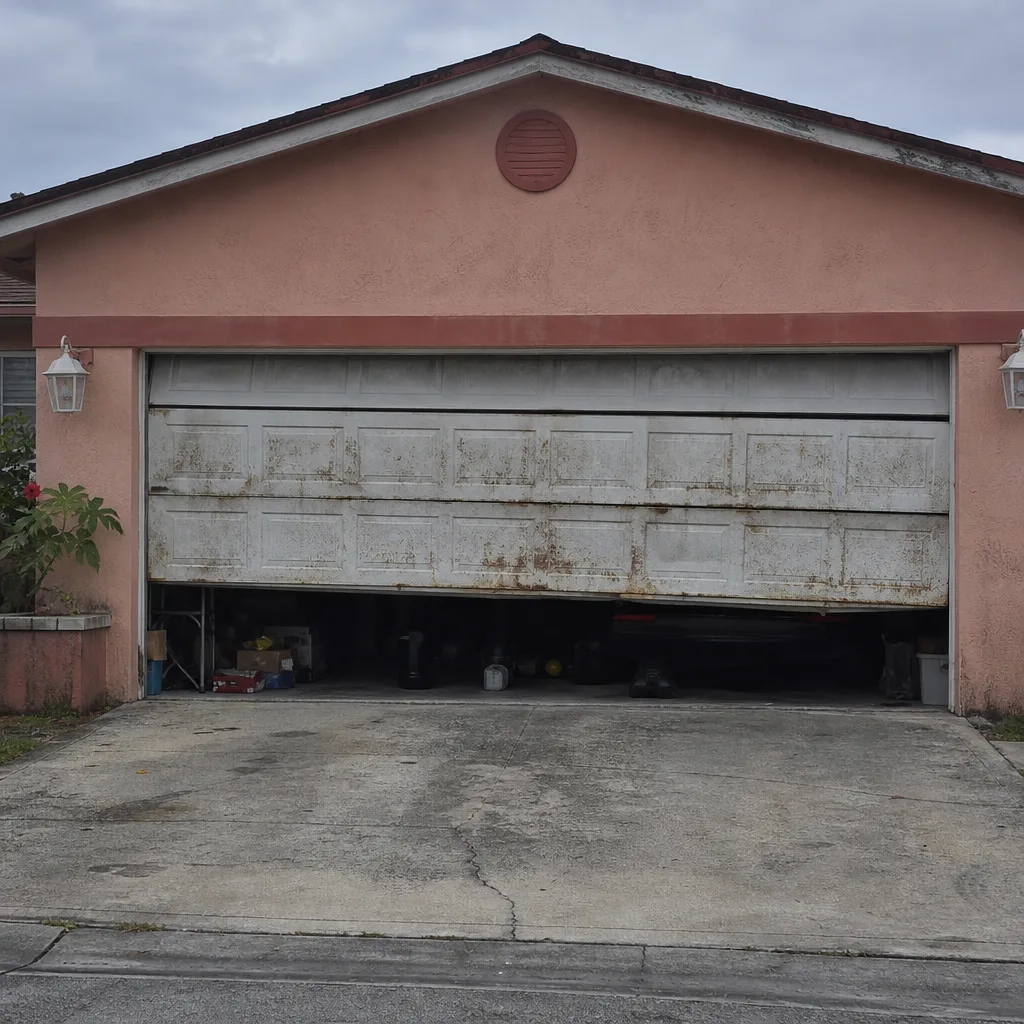 Before
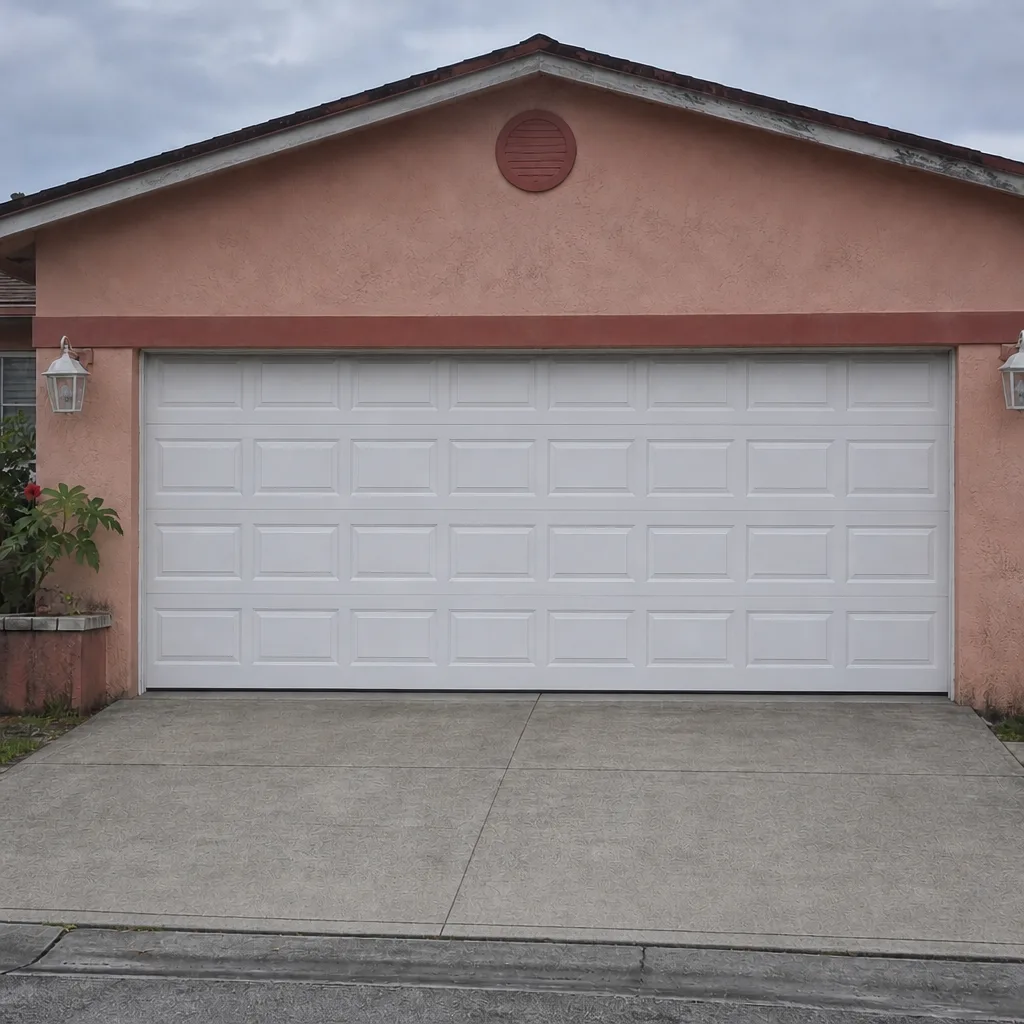 After
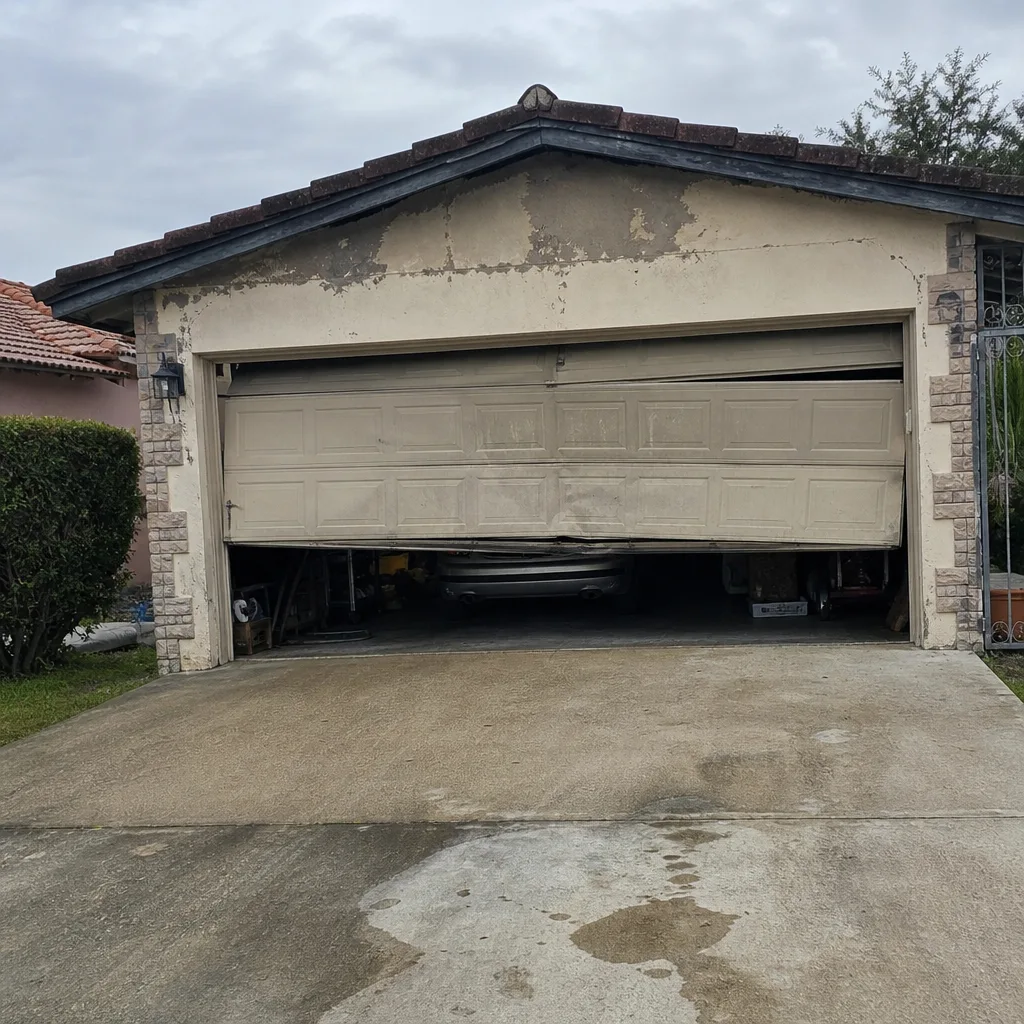 Before
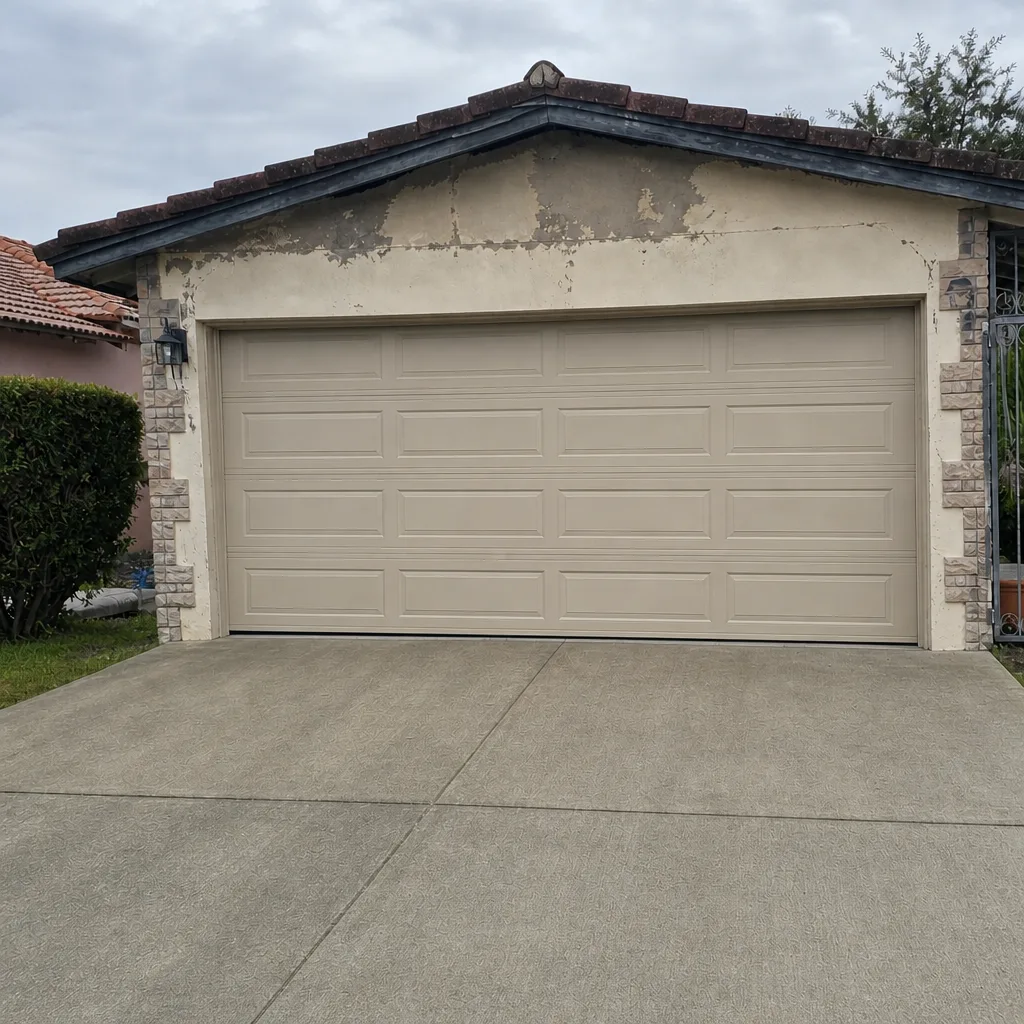 After
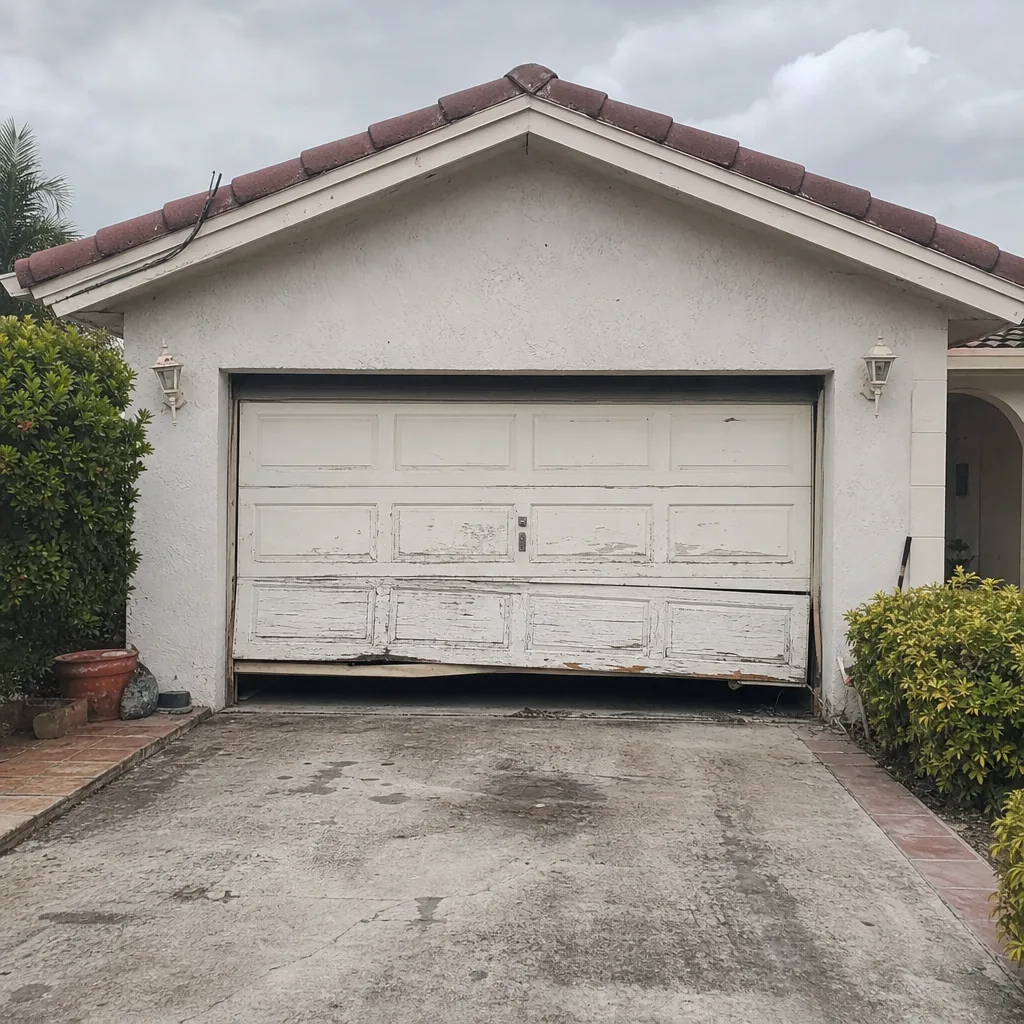 Before
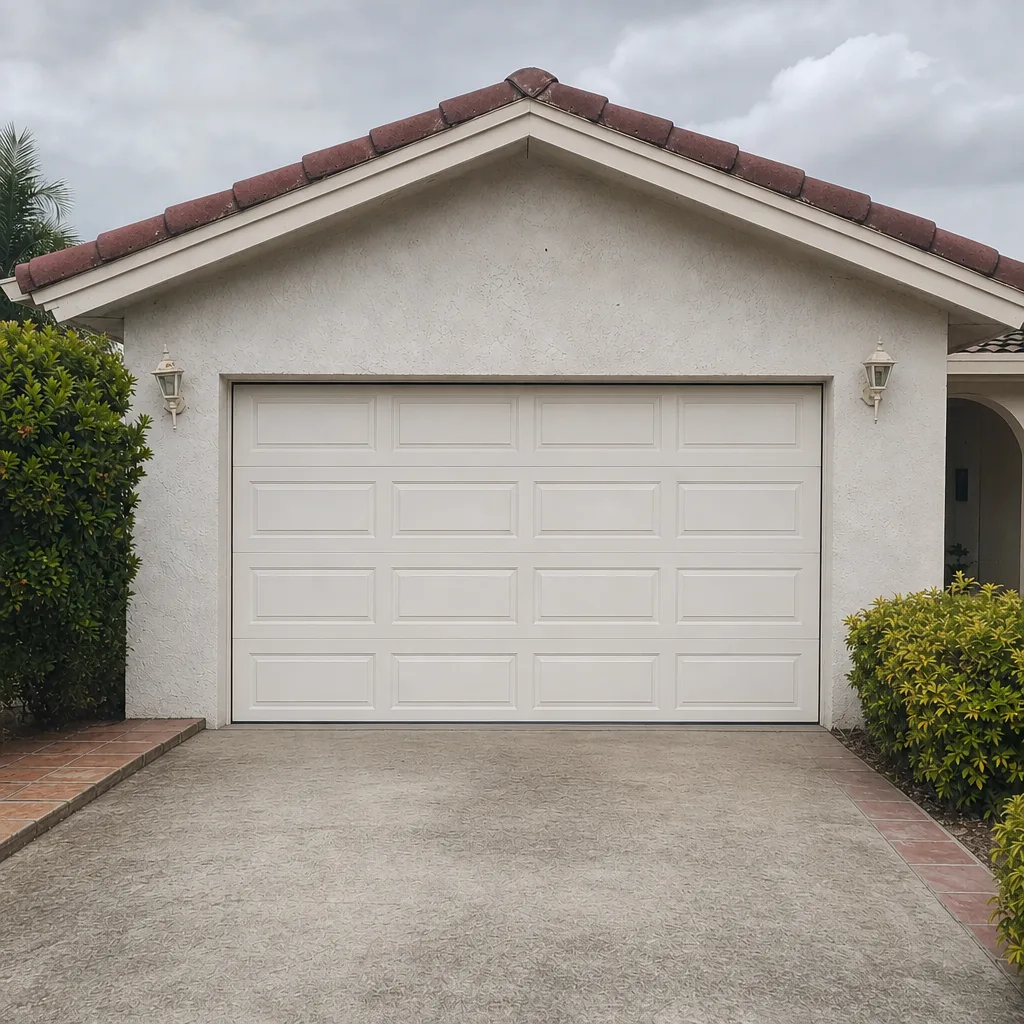 After
Common Mistakes to Avoid
- Loosening a torsion spring to stop a noise. The noise is a symptom, not the cause, and touching the spring under load is the single most dangerous thing a homeowner can do on a garage door. Diagnose the noise first, or call.
- Replacing one spring when the pair is worn. Springs wear together, and a mismatched pair leaves the door unbalanced, which wears the opener and the tracks. Replace both.
- Pulling a permit-required job without a permit. In Hialeah, structural work and opener electrical connections typically need a permit and a licensed contractor. Skipping it creates a problem that surfaces later, often at resale.
- Assuming a door opener can fix a mechanical problem. A straining opener on a heavy door is often a sign the spring is failing, not the opener. Replacing the opener without addressing the door just wears out the new unit.
- Ignoring rust on springs and cables. In Hialeah’s humidity, surface rust on a loaded component is a warning. It’s cheap to inspect and expensive to ignore.
- Buying parts by guesswork. Brand and model matter. A Wayne Dalton roller and a Raynor hinge aren’t interchangeable on every door, and a wrong part can leave the door unsafe or scrapping the track.
- Continuing a job after finding something you didn’t expect. A frayed cable found mid-maintenance is a stop sign, not a “get it back together” challenge. Stop, brace if needed, and hand off.
Frequently Asked Questions
No. A torsion spring stores a large amount of energy, and a sudden release can cause severe injury. Spring replacement needs specialty tools and training, which is why we treat it as a professional-only repair. If your spring has snapped, call (833) 309-5115 for a free estimate.
Usually yes. Garage door replacement that affects the structural opening typically requires a permit and a licensed contractor under local building code. Confirm the specifics with the City of Hialeah building department before you plan the work, and ask any contractor who pulls the permit.
Sometimes. If the problem is a misaligned or dirty safety sensor, cleaning and realigning it is a safe DIY fix. If the door is crooked, the spring is broken, or the opener runs but the door won’t move, stop and call – those are professional repairs. Call (833) 309-5115 for a free estimate.
One torsion spring replacement typically runs $180 to $340 in the Hialeah area, and a matched pair is usually replaced together at roughly double that. These are estimates, and the written quote you receive before work starts sets the final price. Call (833) 309-5115 for an exact quote – estimates are free.
Yes. The local professionals we connect you with are licensed and insured as Florida requires, and we can work with your insurer if a claim is involved. You can verify a contractor’s state license before hiring – ask for the license and confirm it. Call (833) 309-5115 for details.
Stop immediately, don’t remove any hardware under tension, keep people clear, and brace the door safely if it could drop. Then call us with the brand and what you found. Hialeah Garage Door Repair Co handles emergency calls for stuck or partly disassembled doors, and we work on LiftMaster, Chamberlain, Genie, Clopay, Amarr, Wayne Dalton, Craftsman and Raynor systems.
The Bottom Line
The DIY vs professional question has a clearer answer than most guides let on. There’s a real line, and it runs between the low-energy maintenance tasks you can safely handle and the loaded, structural, or code-regulated work you shouldn’t touch. Weatherstripping, lubrication, sensor alignment and remote programming are homeowner territory. Springs, cables, drums, structural panels and full door replacement are not – they carry genuine injury risk and, in Hialeah, often a permit requirement that makes DIY non-compliant on top of unsafe. The money question sorts itself out once you count the true cost: on spring and cable work, hiring a pro usually costs less than the risk of doing it yourself.
If you’re staring at a job that belongs on the professional side, or you’ve started one and need a hand off, Hialeah Garage Door Repair Co is ready. Our technicians have up to 13 years of experience and are trained across the major brands, so we arrive knowing your system. Every job gets a written estimate before any work starts, and estimates are free. Call (833) 309-5115 today for a free estimate, or reach out through Hialeah Garage Door Repair Co.
Written by the team at Hialeah Garage Door Repair Co.